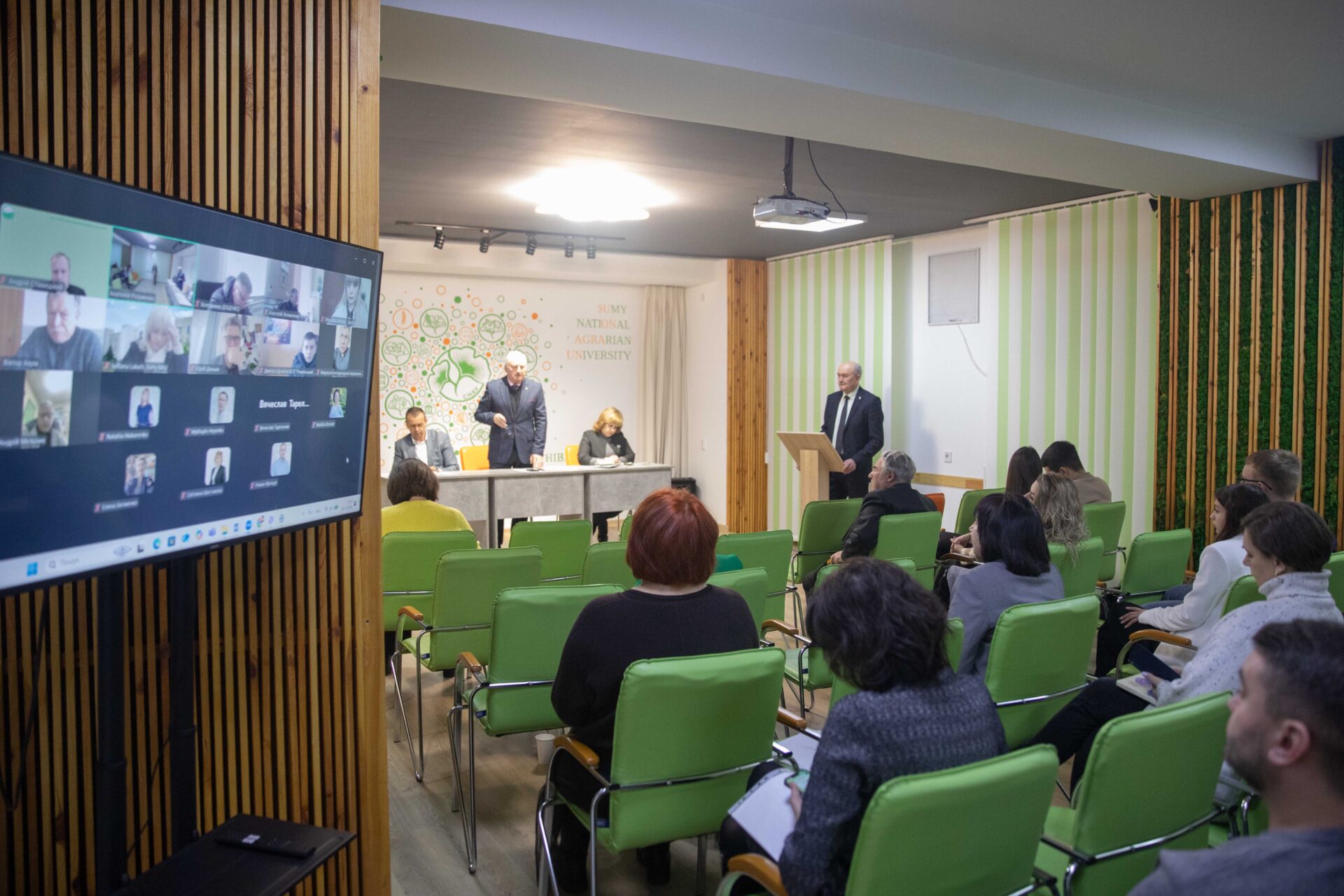
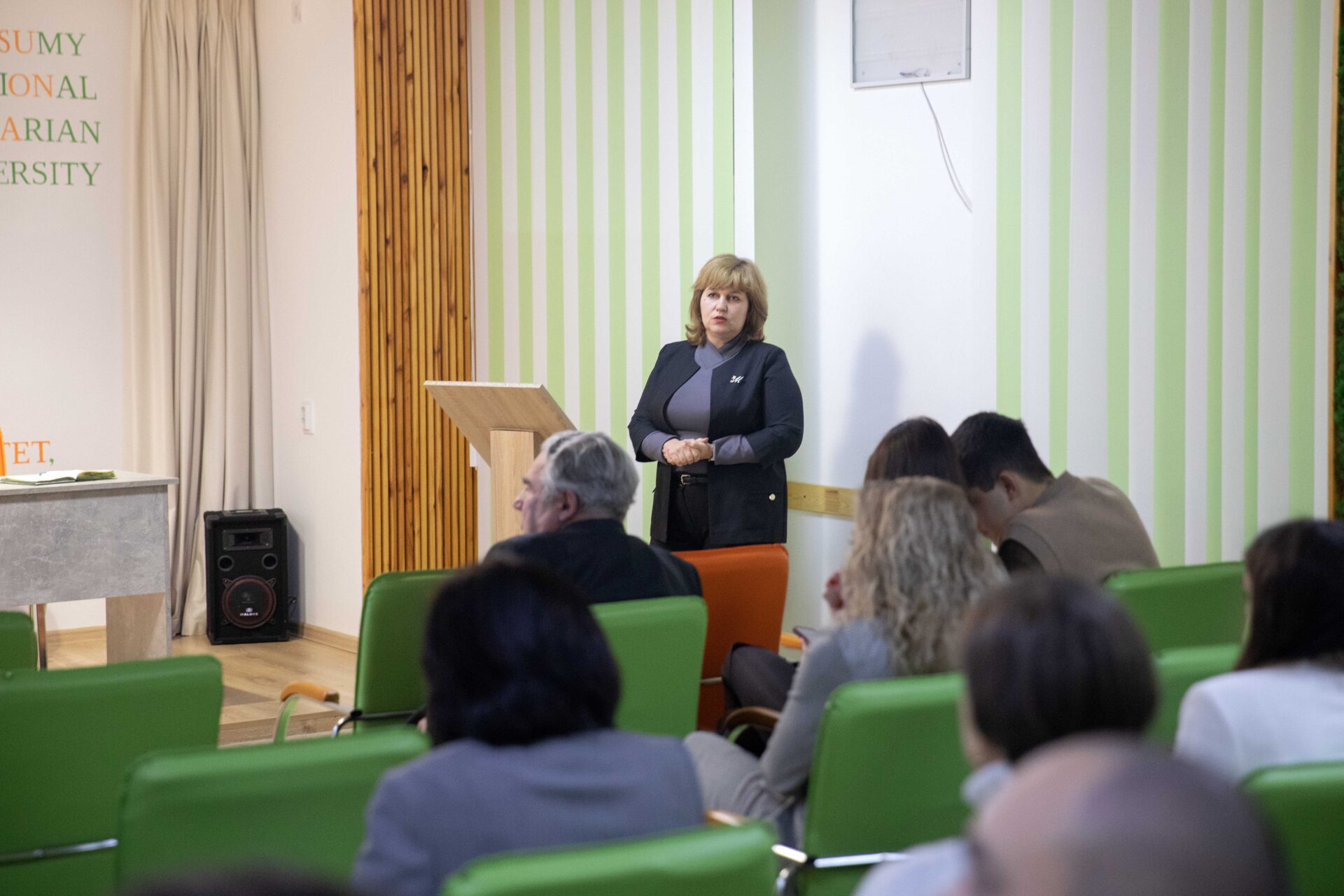
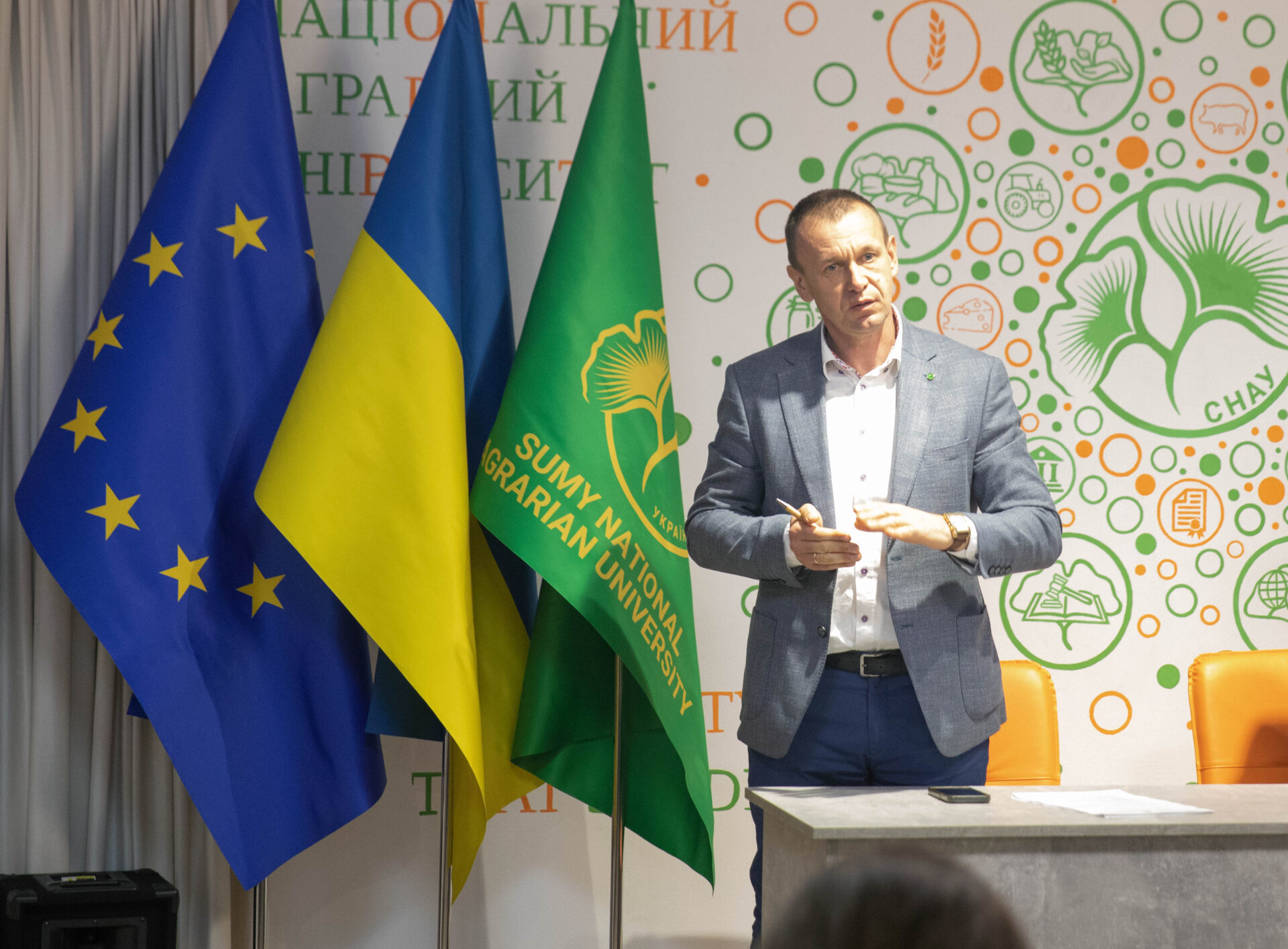
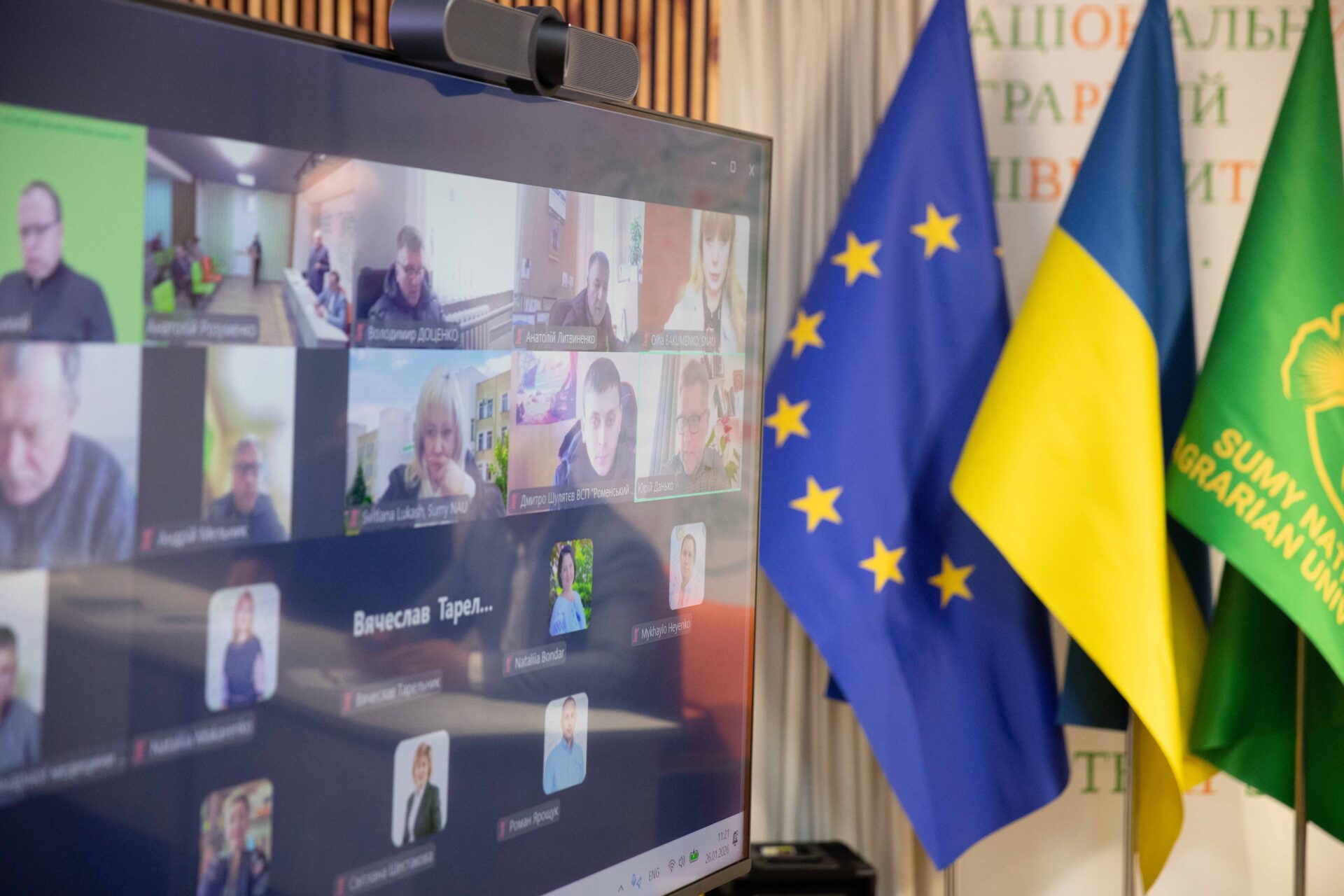
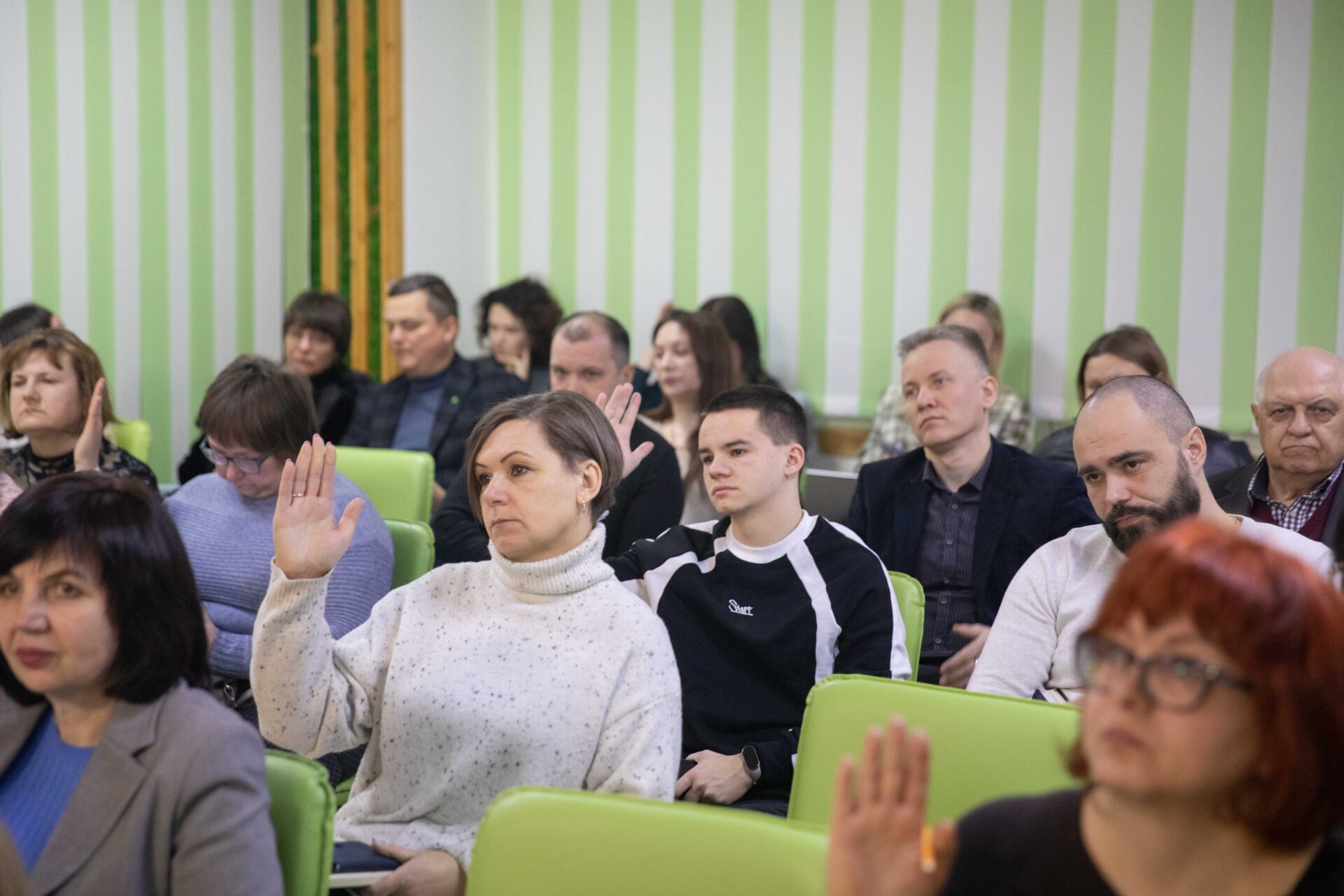
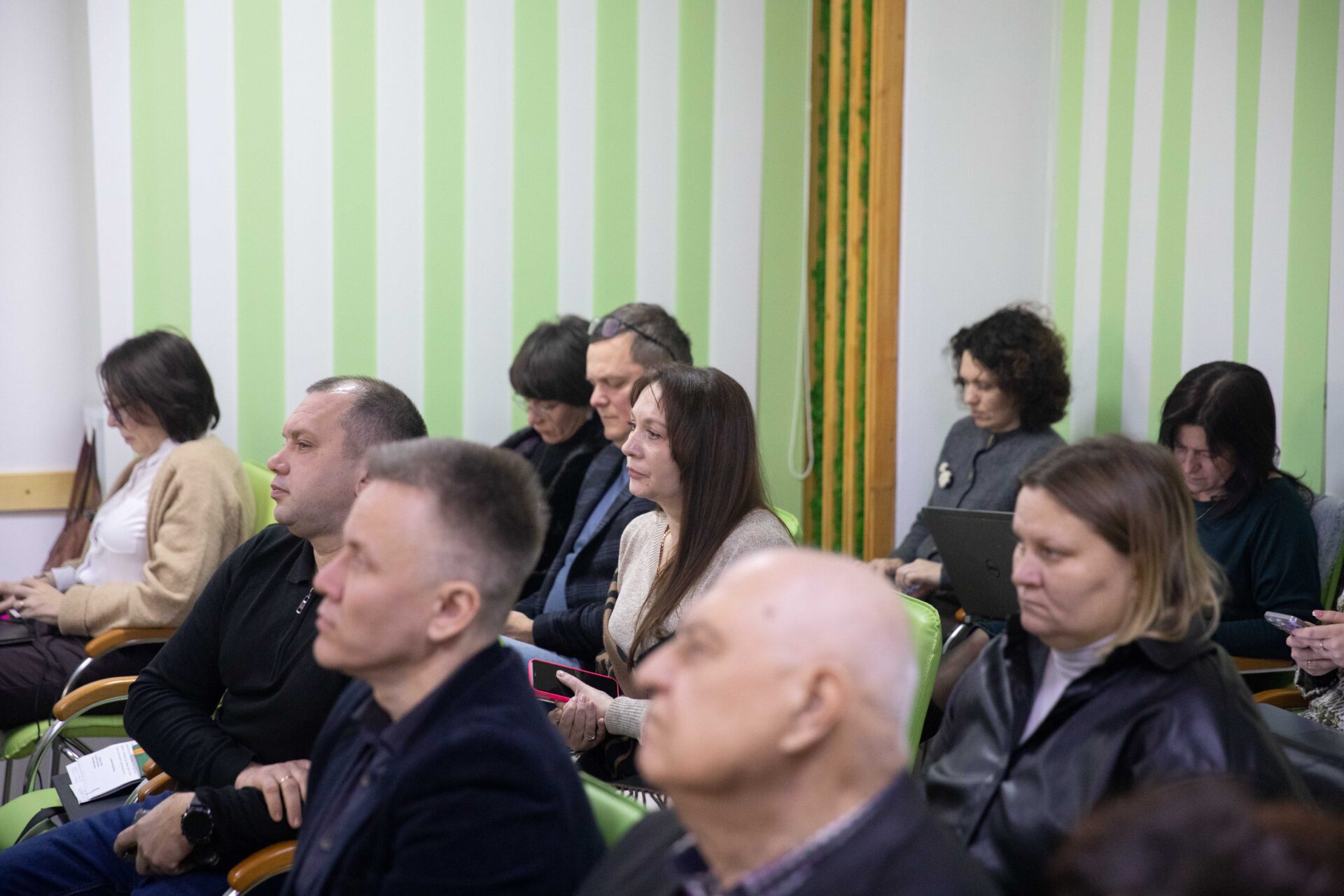
On 26 January 2026, a regular meeting of the Academic Council was held at Sumy National Agrarian University, during which a number of topical issues related to the educational, scientific, financial, economic and organisational activities of the university were considered.
As part of the agenda, the members of the Academic Council heard a report by Margarita Lyshenko, Vice-Rector for Scientific, Pedagogical and Educational Work, on the results of the winter examination session for the 2025–2026 academic year. The issue of approving named scholarships based on the results of the autumn semester of the 2025–2026 academic year was also considered.
The results of the financial and economic activities of Sumy NAU in 2025 were reported by the Vice-Rector for Economic and Administrative Activities Mykola Kovalenko and Chief Accountant Nataliia Mazina.
Considerable attention was paid to issues related to the organisation of the educational process. In particular, the Academic Council approved the Strategic Plan for the Digital Transformation of Sumy National Agrarian University for 2026–2030, as well as a number of provisions regulating professional development within the internal education quality assurance system in education, the organisation of inclusive learning, the activities of social and psychological services, expert councils of employers, stakeholder surveys, the work of the veterans’ council, and measures to combat bullying, mobbing, sexual harassment, and discrimination at the university.
In the section on economic activity, regulations were approved for the planning and finance department and for the leading specialist in public procurement at Sumy NAU.
Issues related to scientific work were considered based on the results of a meeting of the university’s Scientific and Coordination Council. A report was presented by Yurii Danko, Vice-Rector for Scientific and International Activities. The Academic Council decided to approve regulations, postgraduate issues, the creation of one-off specialised academic councils for the defence of dissertations, recommendations for scientific works for publication, recognition of international internships, referrals for internships and approval of reports on scientific research work.
Following the meeting, the Academic Council adopted relevant decisions on all items on the agenda.