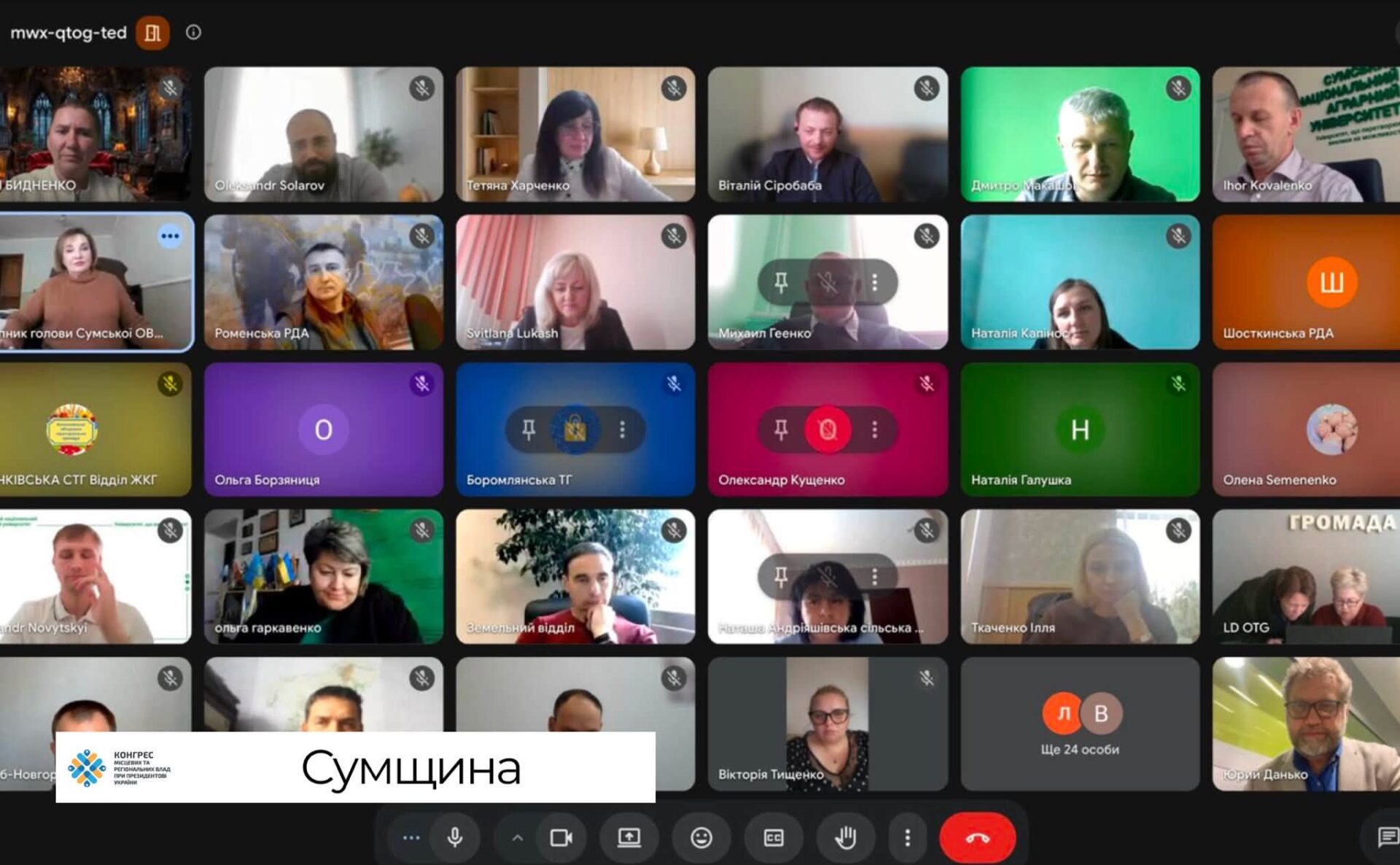
How can spatial plans be transformed into investment projects, communities made more energy-efficient and accessible, and management decisions made data-driven? These questions formed the basis of a meeting of representatives from Sumy National Agrarian University as part of the Living Lab educational cluster, which took place on October 8 at the initiative of the Office of the Congress of Local and Regional Authorities under the President of Ukraine.
Representatives of the regional government and experts from Sumy National Agrarian University joined the discussion, presenting the university’s capabilities in the fields of spatial planning, architecture, energy efficiency, geodesy, project management, and sustainable regional development.
The meeting was opened by Svitlana Lypova, Deputy Head of the Sumy Regional State Administration and Head of the Regional Military Administration; Ihor Kovalenko, Rector of the Sumy National Agrarian University (SNAU); and Yurii Danko, Vice Rector for Research and International Affairs and coordinator of the university’s Living Lab educational cluster.
One of the central topics was the status of providing the region’s local communities with urban planning documentation. Dmytro Makashov, Acting Head of the Department of Urban Planning and Architecture of the Sumy Regional State Administration, reported on this issue.
Representatives from SNAU focused on practical tools that can help communities move from identifying needs to planning changes and implementing projects.
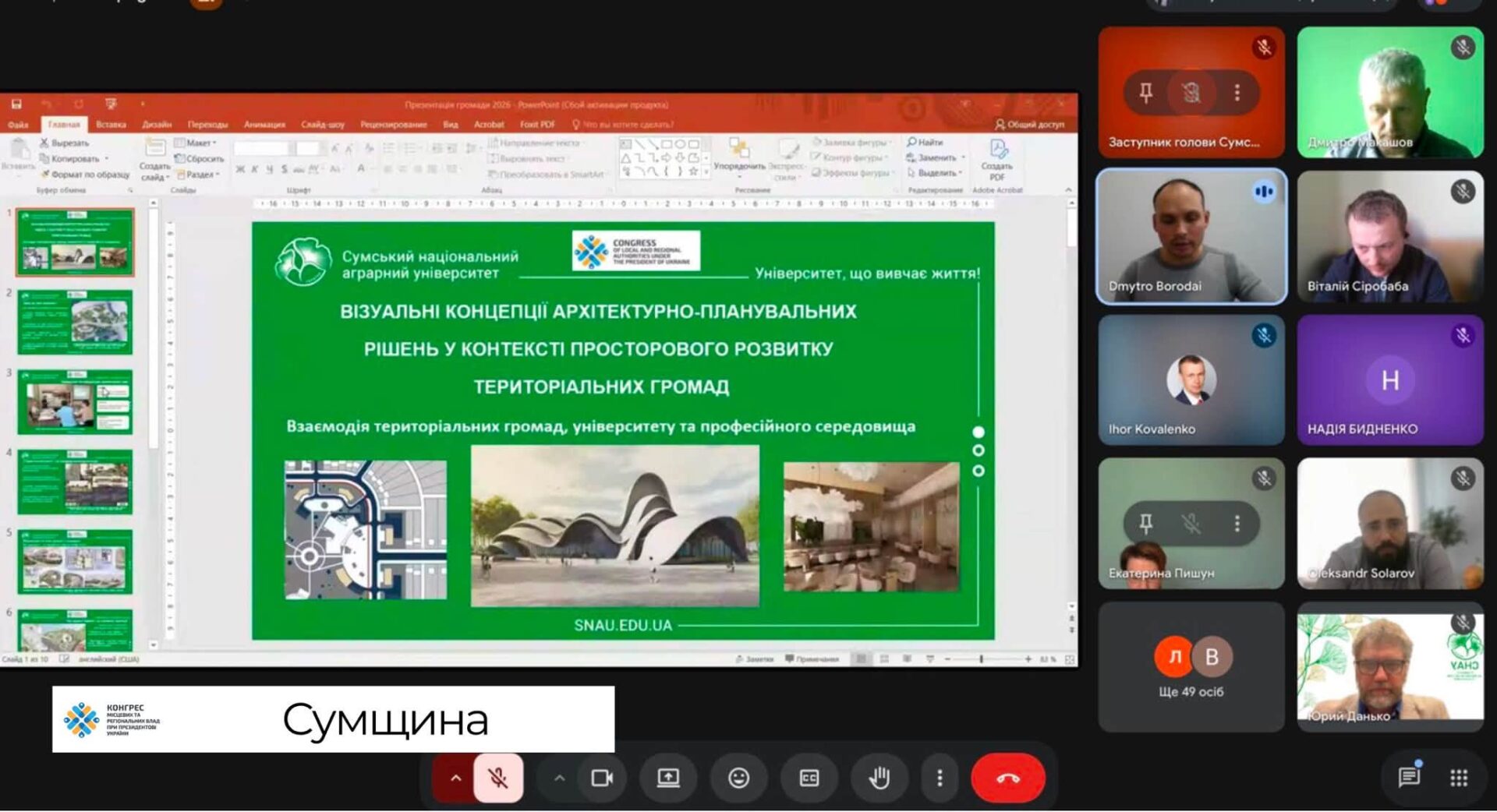
Dmytro Boroday, Ph.D. in Architecture, Associate Professor, and Chair of the Department of Architecture and Engineering Surveys, presented visual concepts for architectural and planning solutions in the context of communities’ spatial development. This approach allows future changes to be viewed not merely as a set of documents, but as a holistic vision for the territory’s development.
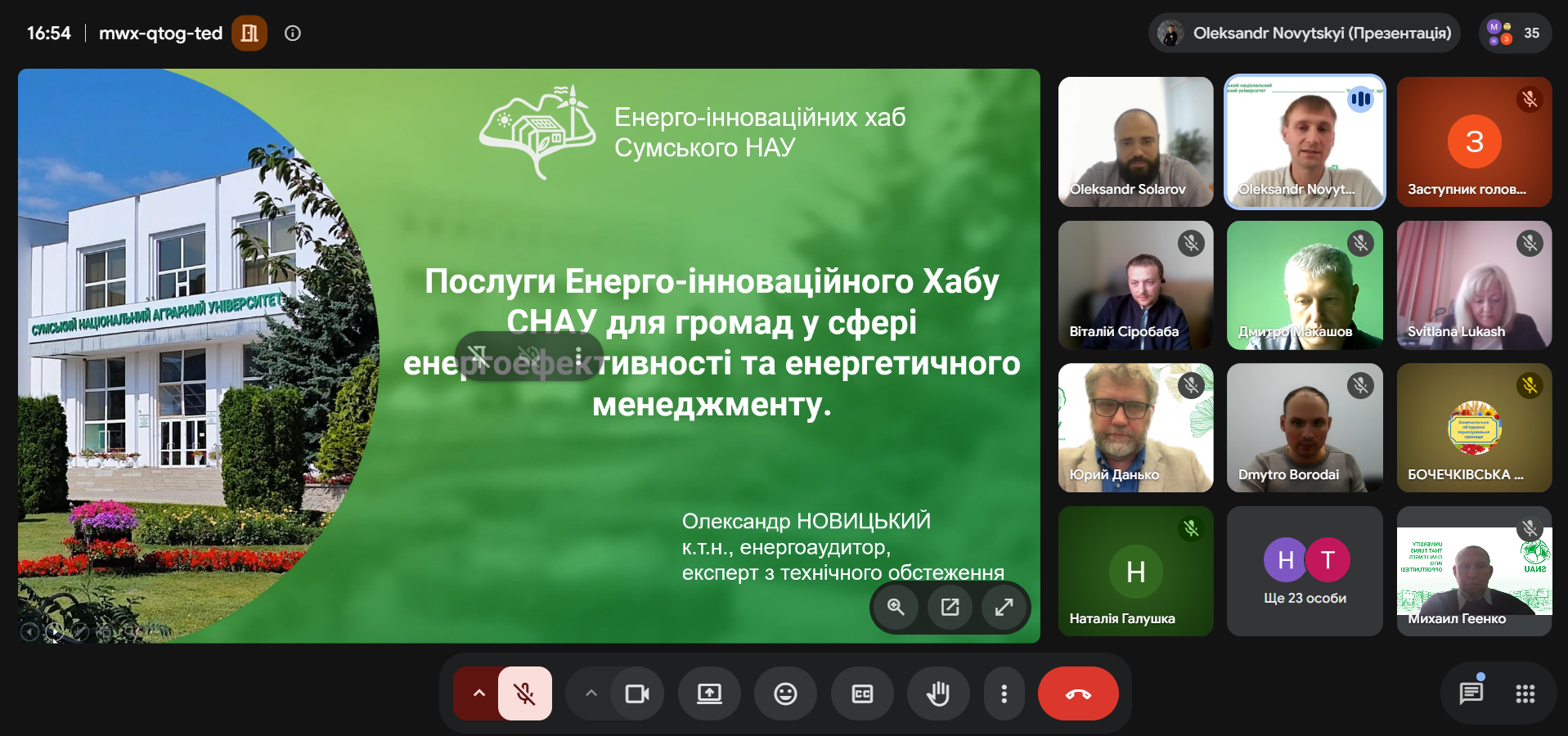
Oleksandr Novitsky, Candidate of Technical Sciences and Associate Professor in the Department of Construction and Building Operations, spoke about the services offered by the SNAU Energy Innovation Hub to communities in the areas of energy efficiency and energy management. He discussed the university’s expertise, which can serve as a foundation for finding solutions related to the rational use of energy.
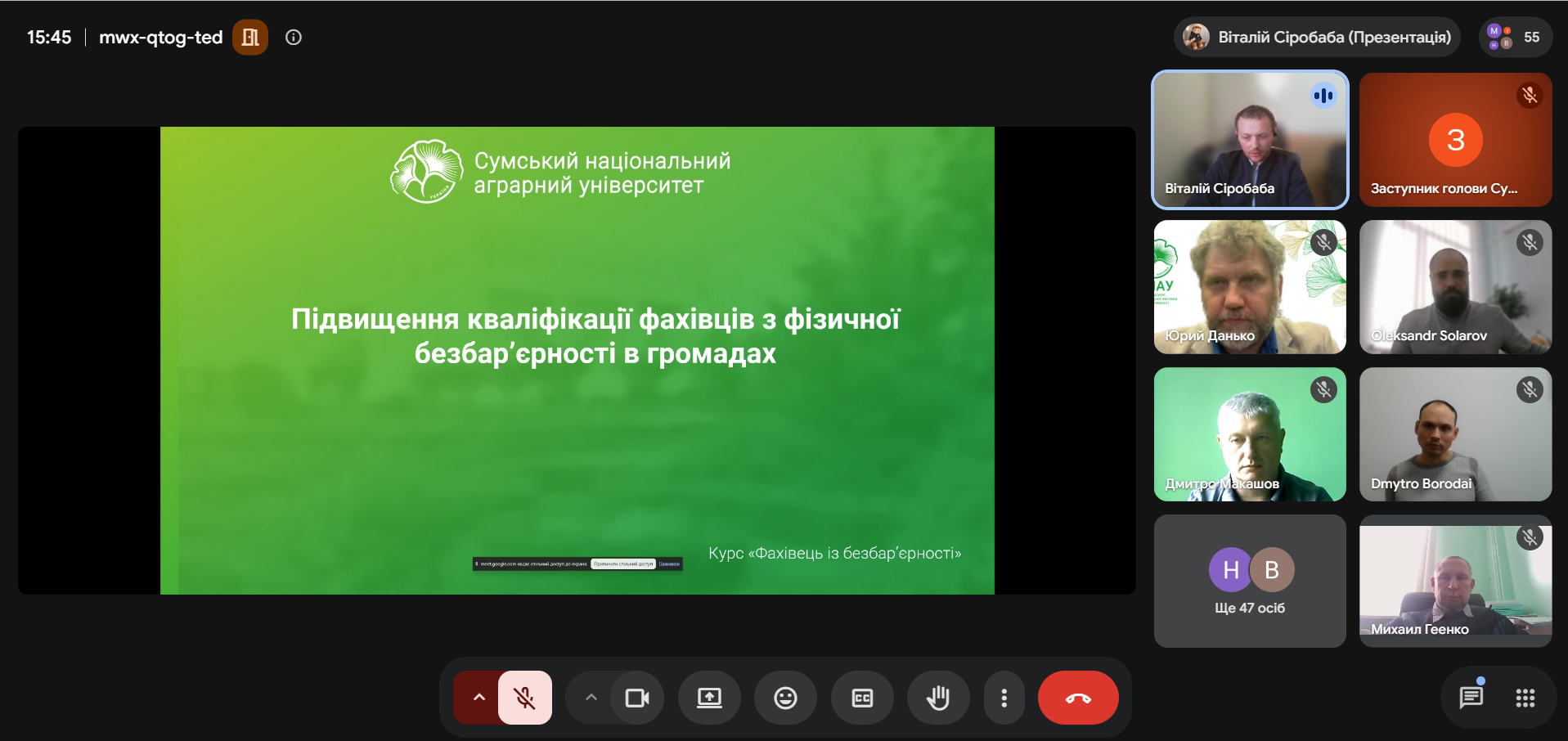
Another important area is the accessibility of public spaces. Vitalii Sirobaba, Candidate of Technical Sciences and Associate Professor in the Department of Construction and Building Operations, presented on the topic of professional development for specialists in physical accessibility within communities.
A separate set of presentations focused on tools that help communities identify development priorities and plan their implementation
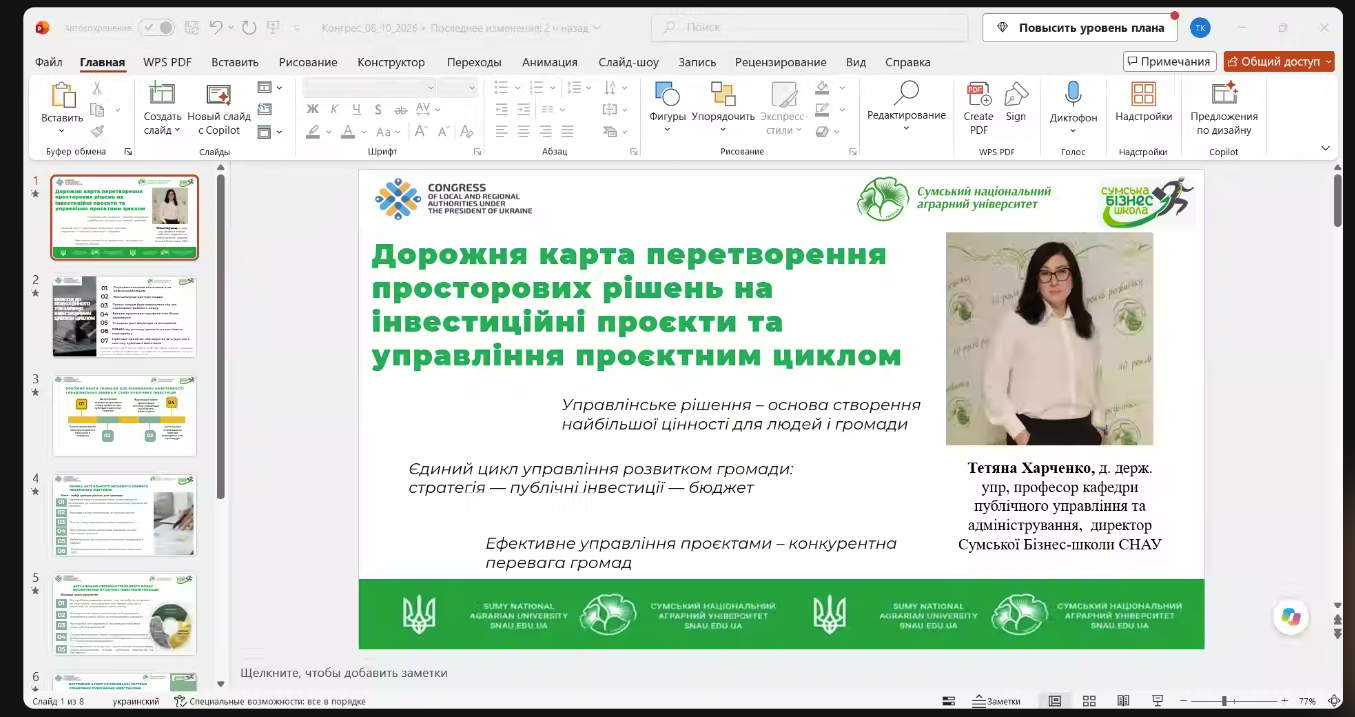
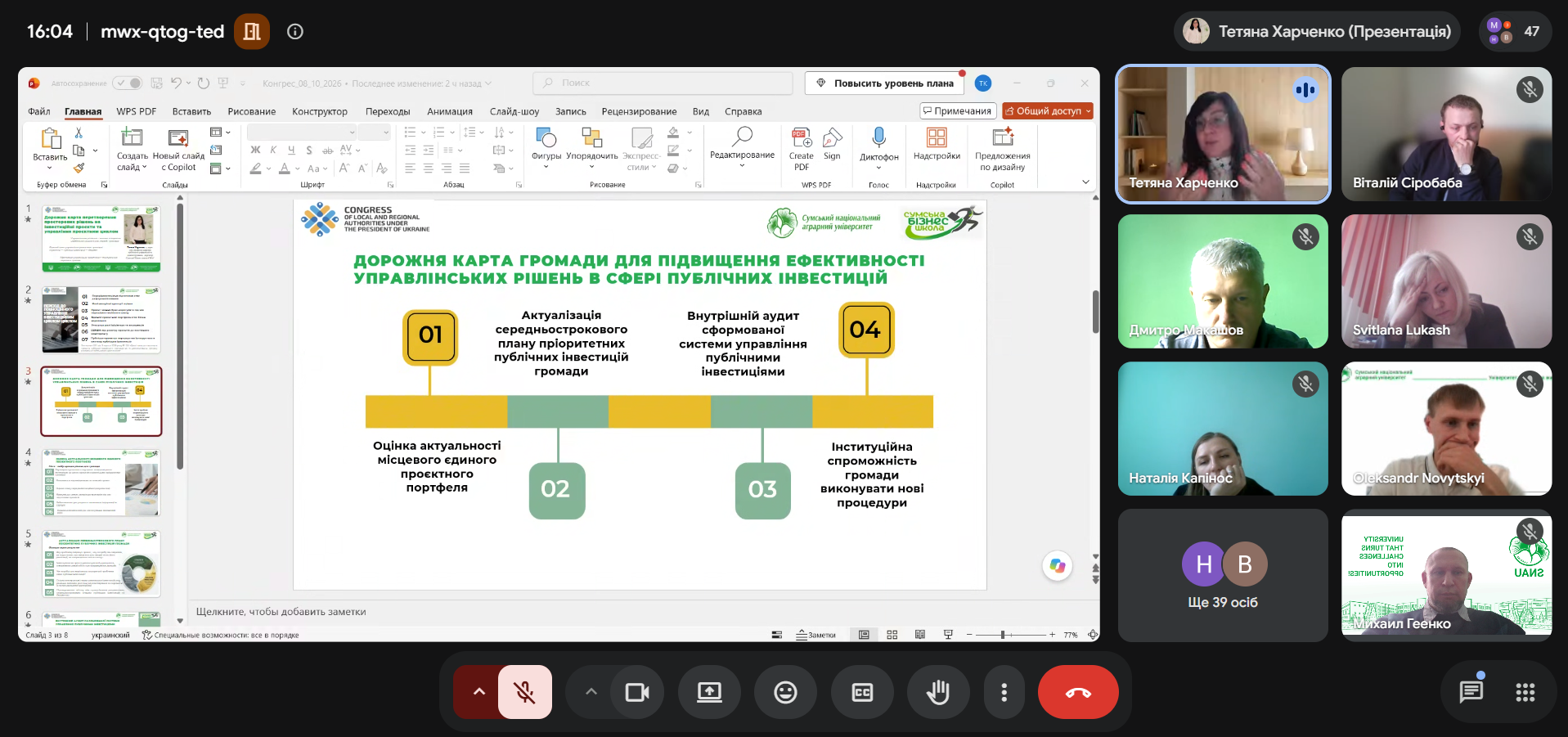
Tetiana Kharchenko, Doctor. in Public Administration, associate professor, and director of the SNAU Business School, presented a roadmap for transforming spatial solutions into investment projects and managing the project cycle. This approach links territorial development planning with the preparation of projects that can be systematically developed and implemented.
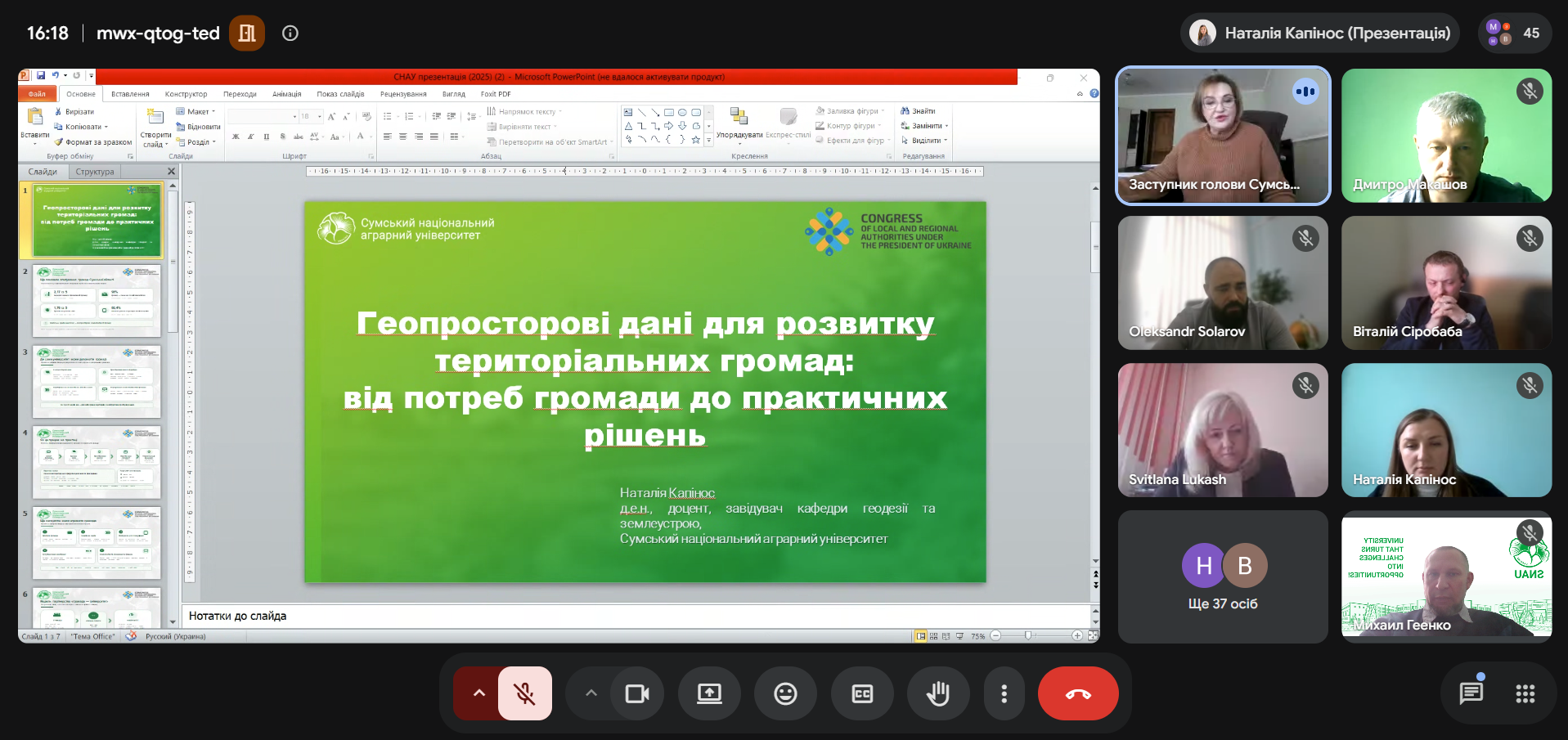
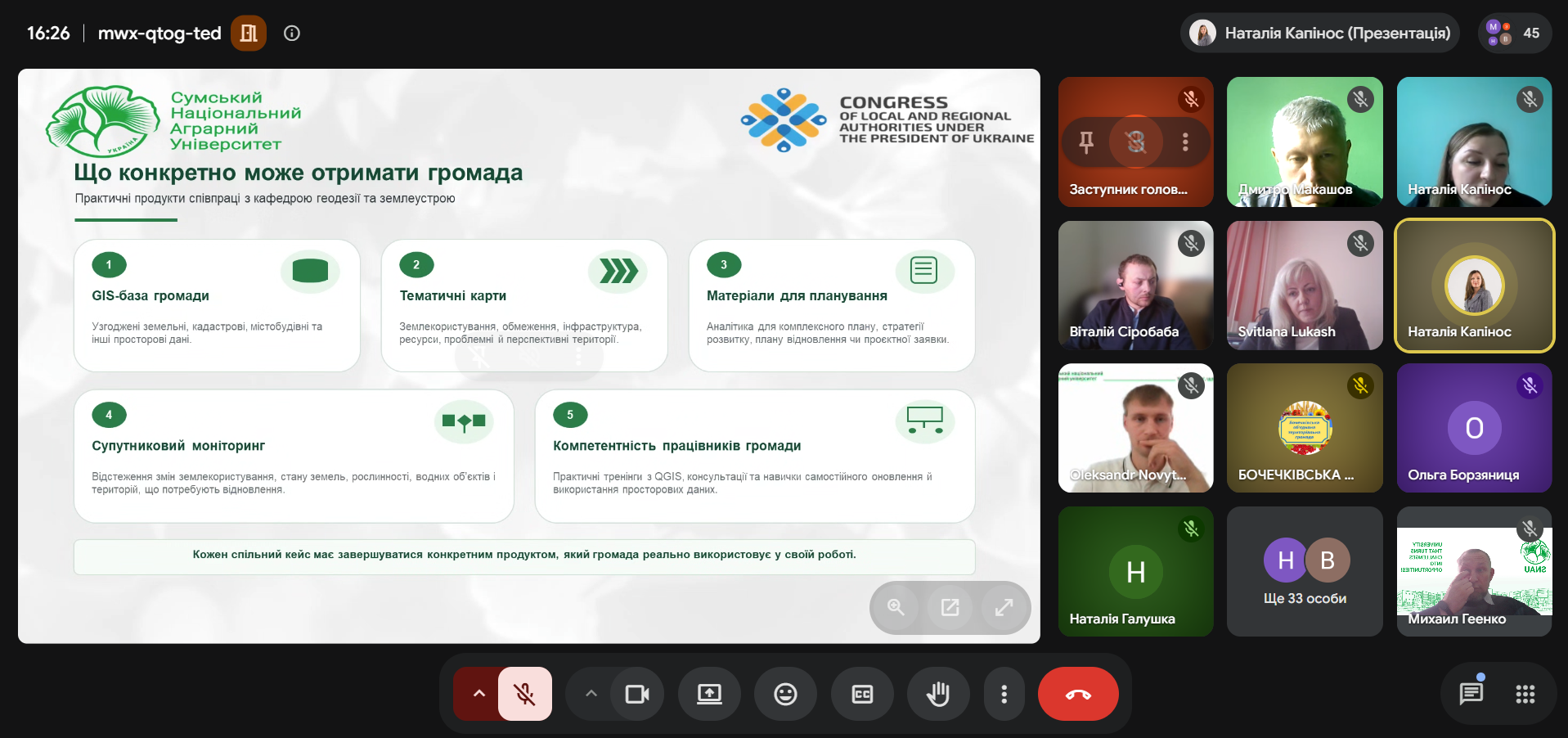
Natalia Kapinos, Doctor in Economics, Associate Professor, and Chair of the Department of Geodesy and Land Management, explored the topic of using geospatial data for the development of local communities—from identifying local needs to finding practical solutions.
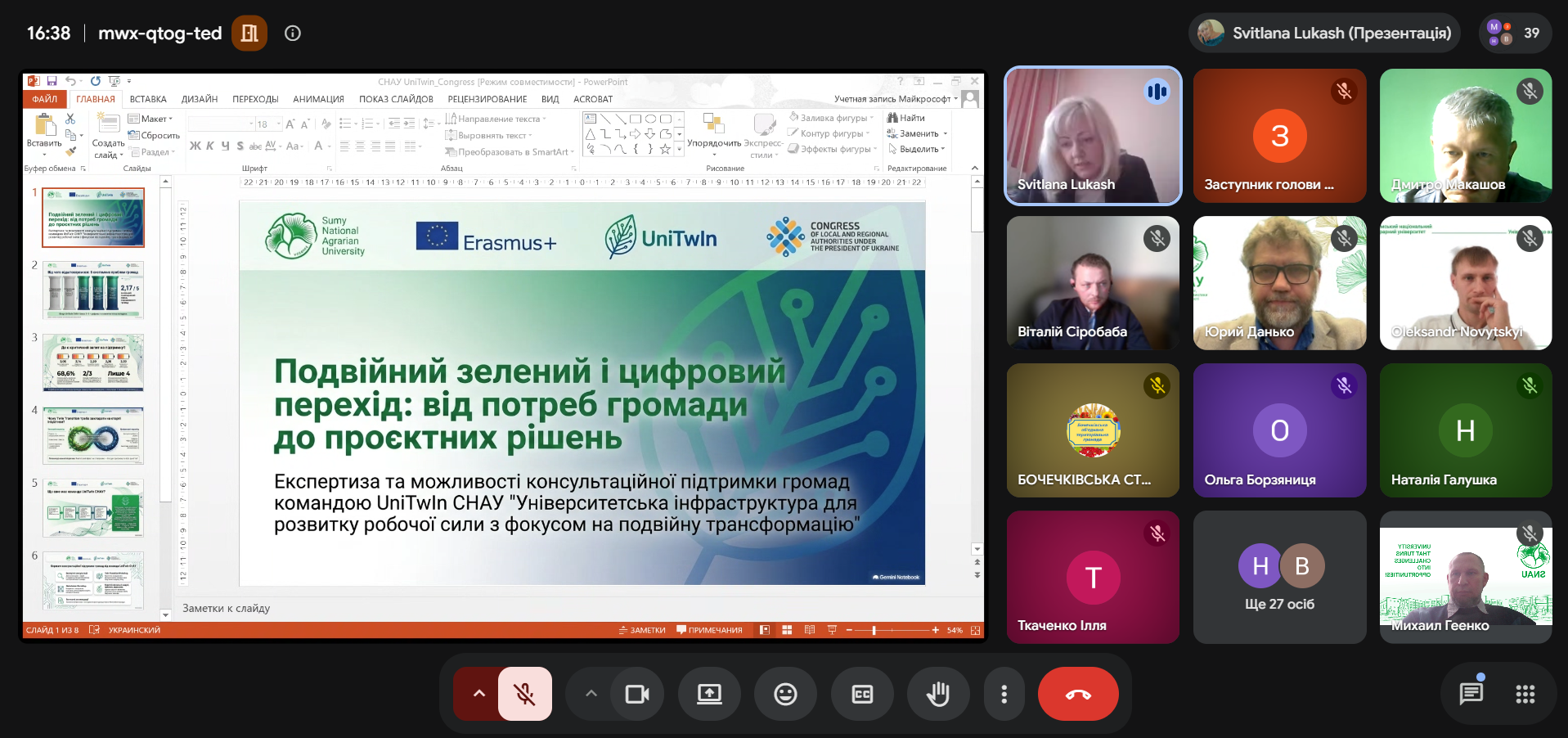
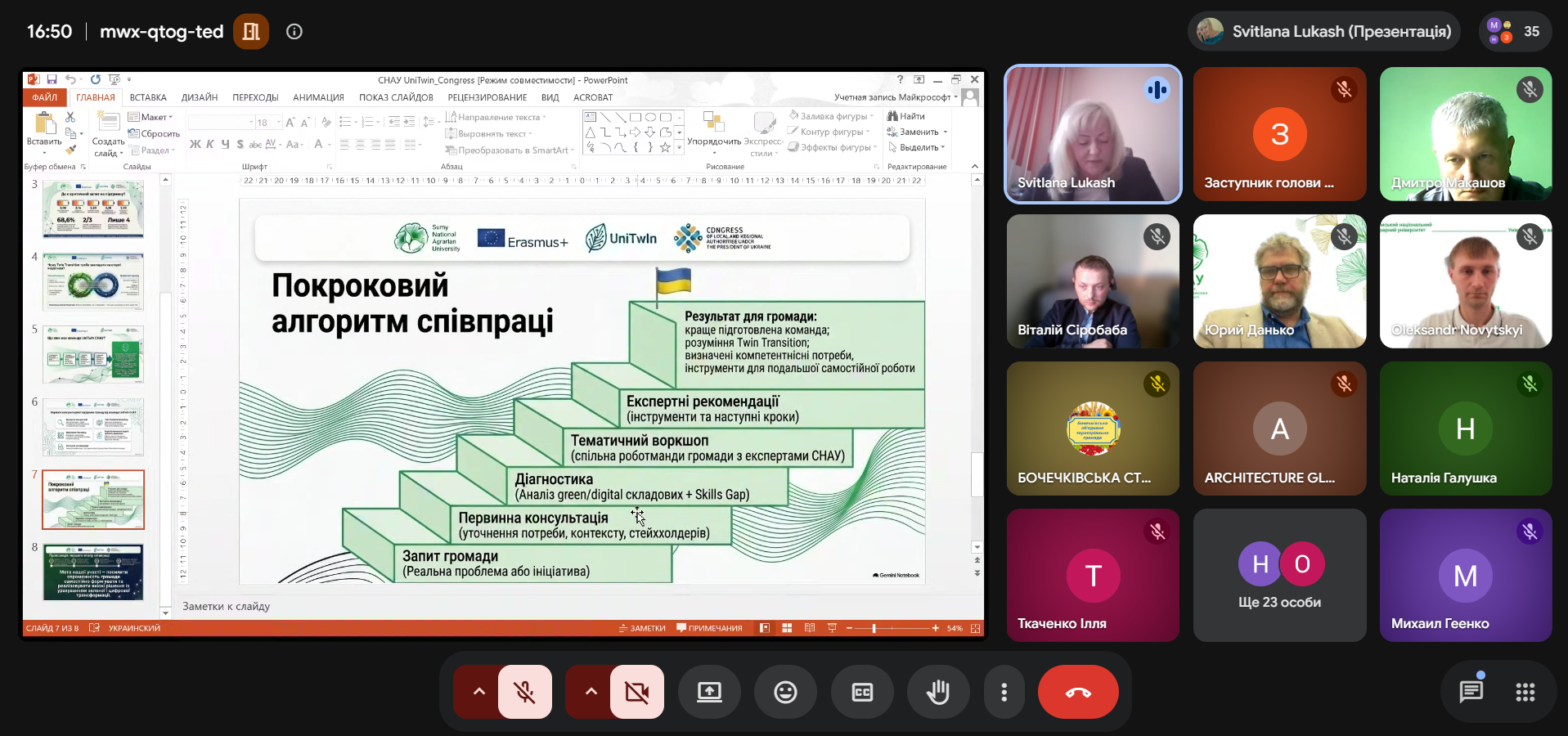
Svitlana Lukash, Ph.D. in Economics, Associate Professor, and Dean of the Faculty of Economics and Management, concluded the thematic session. Her presentation focused on the dual green and digital transition—from community needs to project solutions.
Each presentation was followed by a lively discussion: participants asked questions, exchanged views, and explored how the proposed approaches could be applied to address the pressing challenges facing local communities. The discussion provided an opportunity to delve deeper into the practical significance of the presented findings and the potential for their application to the development of the Sumy region.
SNAU’s participation in the Living Lab opens up opportunities for the practical application of university knowledge beyond the classroom. Architectural planning, geodesy and land management, energy efficiency, project management, and digital solutions complement one another and help foster a comprehensive approach to regional development.
For communities, this is an opportunity to draw on professional expertise to solve specific challenges. For the university, it is a chance to combine scientific research with the region’s real needs, develop partnerships, and strengthen the practical component of its activities.
The Living Lab brings universities and communities together around a common goal—finding solutions that help regions develop. SNAU is joining this process by offering the knowledge and expertise of its specialists to help plan the future of communities in the Sumy region.