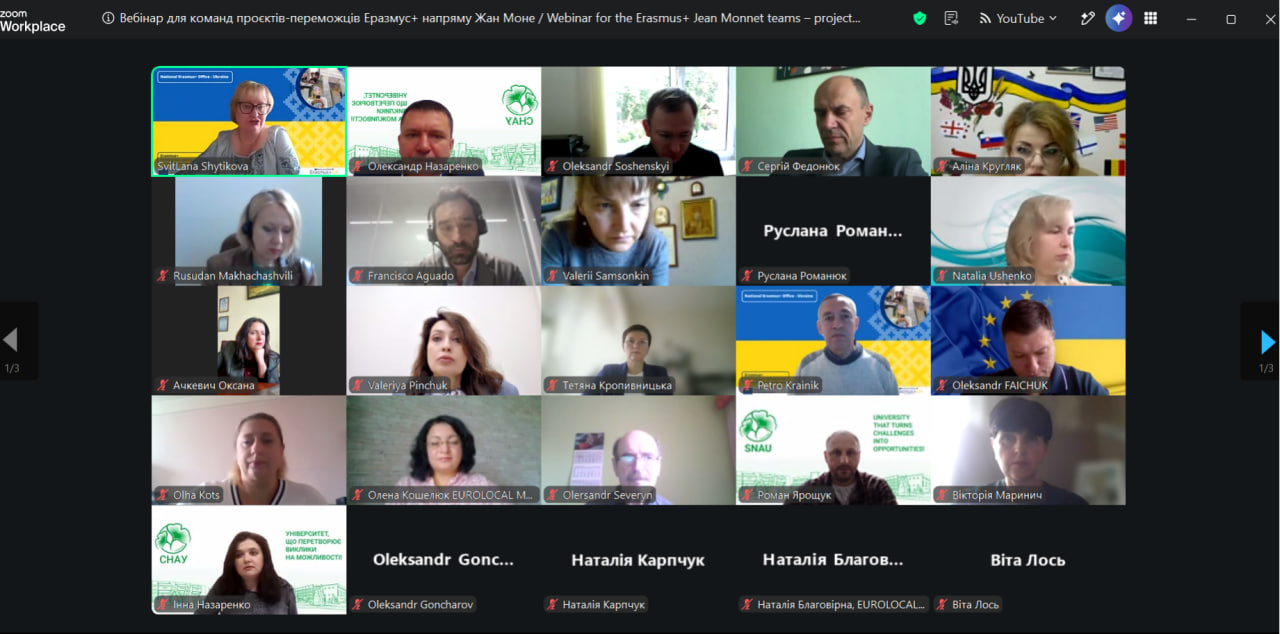
Sumy National Agrarian University (SNAU) took part in a professional dialogue as part of Erasmus Days 2026—an international initiative that brings together participants of the Erasmus+ program to explore opportunities in education, innovation, and international cooperation. During a webinar held for the teams behind the winning projects of the 2026 Jean Monnet competition, the university shared its experience in implementing educational initiatives focused on European forest policy and the restoration of land in Ukraine.
SNAU’s collaboration with the Erasmus+ program spans many years. According to program data, the university has participated in 18 projects between 2014 and 2026, ranking among the top five Ukrainian higher education institutions in this regard. Between 2021 and 2026, SNAU has been involved in 11 Erasmus+ projects, maintaining its position among the top five leaders.
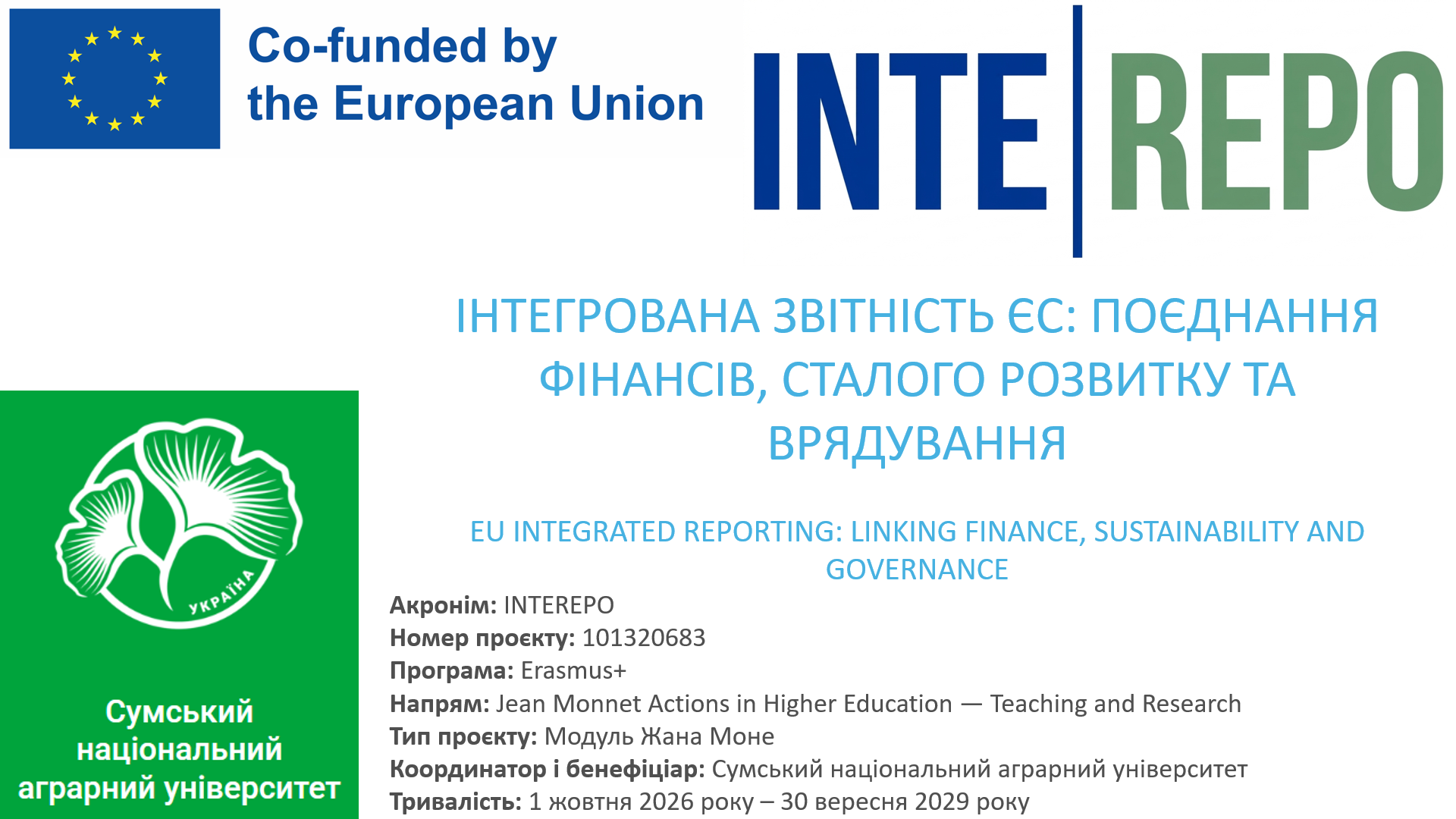
Another aspect of SNAU’s participation in ErasmusDays 2026 was the presentation of the INTEREPO project, which focuses on European Union integrated reporting—combining financial metrics, sustainable development, and corporate governance. Project coordinator Oleksandr Nazarenko introduced the initiative during an online event organized by the National Erasmus+ Office in Ukraine. The project is being implemented from 2026 to 2029 with co-financing from the European Union under the Jean Monnet Actions in Higher Education strand.
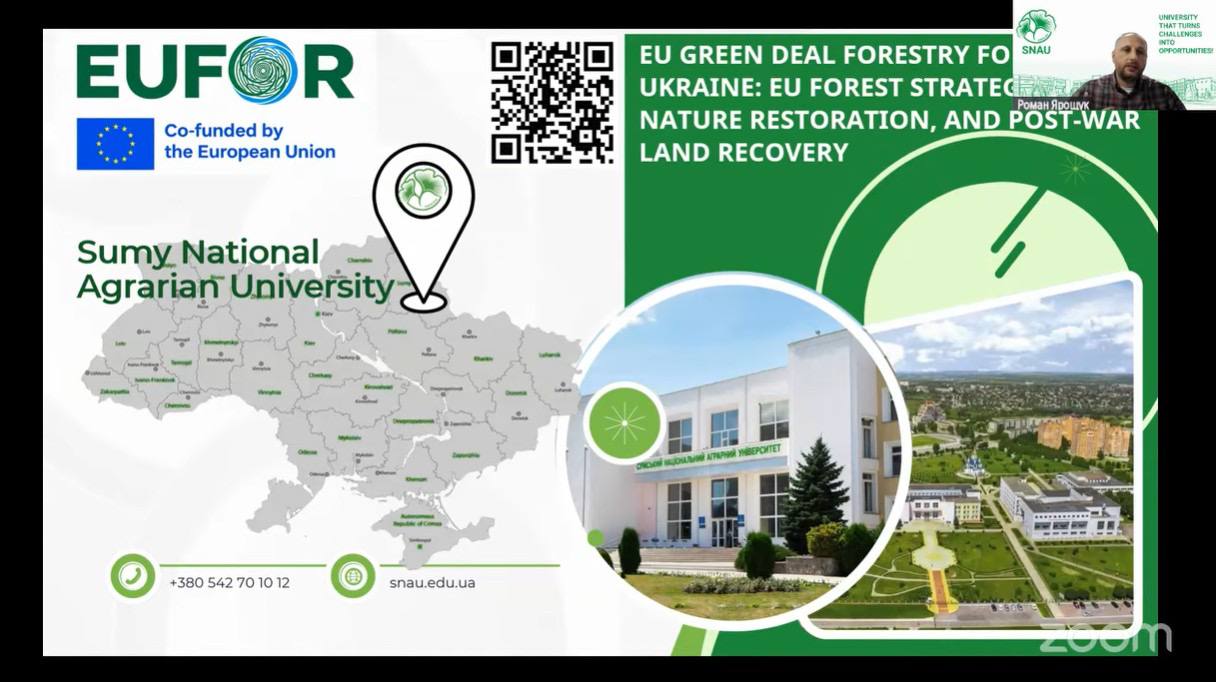
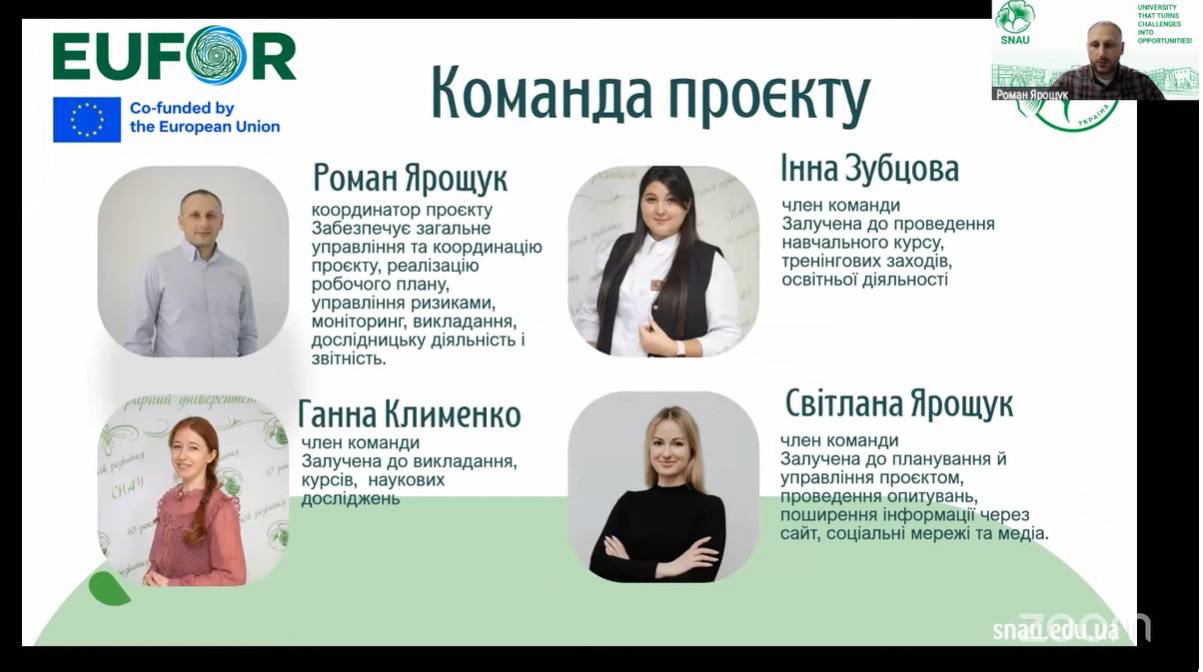
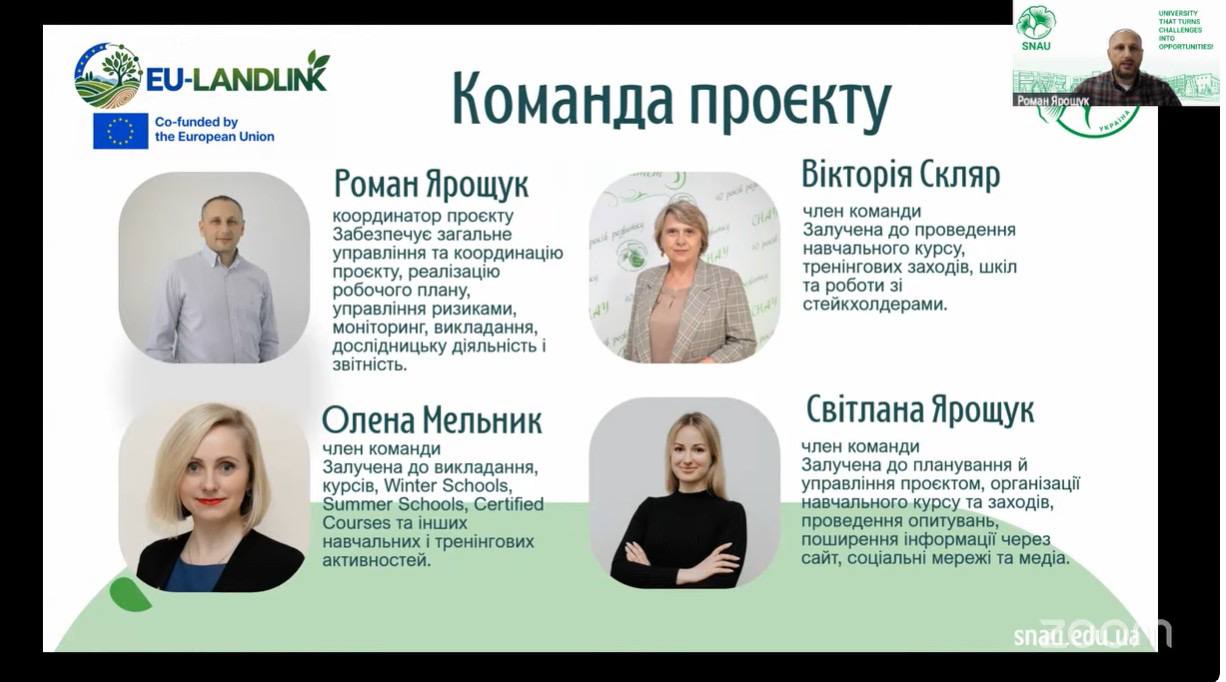
During the webinar titled “Implementing Jean Monnet Projects Under Martial Law in Ukraine: Safety, Communication, and Synergy,” SNAU project coordinator Roman Yaroshchuk presented two university initiatives: EUFOR and EU-LANDLINK. Both projects integrate European approaches to natural resource management with educational and scientific objectives that are crucial for Ukraine’s recovery.
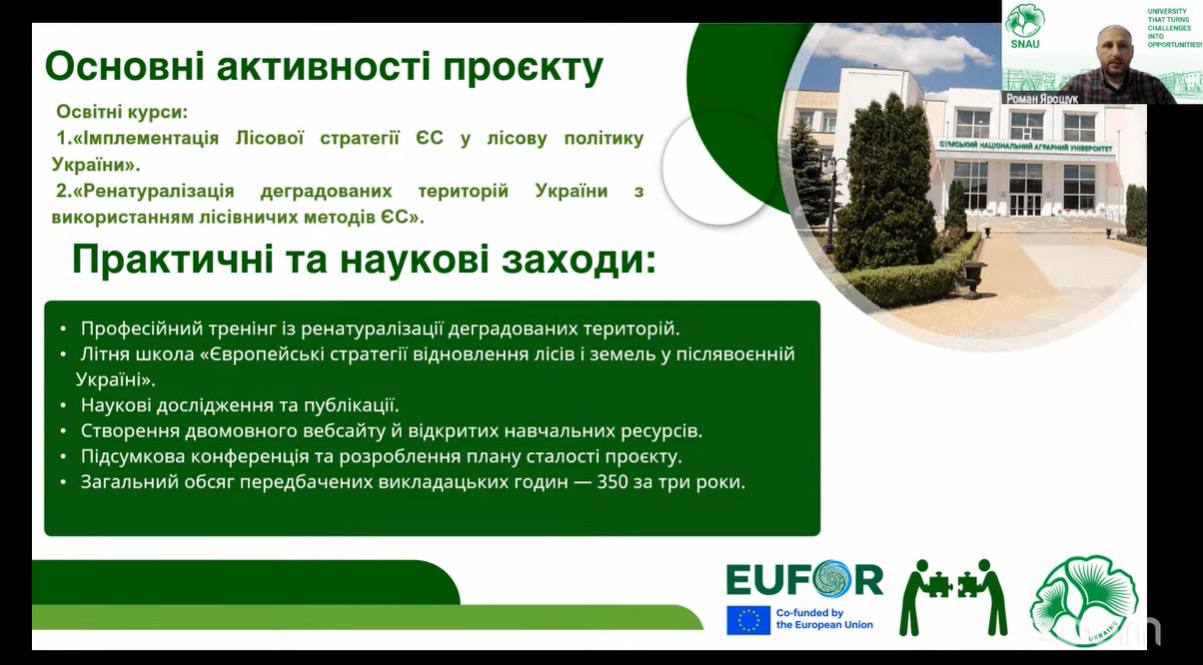
The EUFOR project (EU Green Deal Forestry for Ukraine: EU Forest Strategy, Nature Restoration, and Post-War Land Recovery) focuses on incorporating the principles of the European Green Deal into Ukraine’s forest policy, restoring natural ecosystems, and facilitating post-war land recovery. The initiative includes educational courses, professional training on the renaturalization of degraded areas, a summer school, scientific research, and the creation of open educational resources. In total, 350 hours of teaching activities are planned over the course of three years.
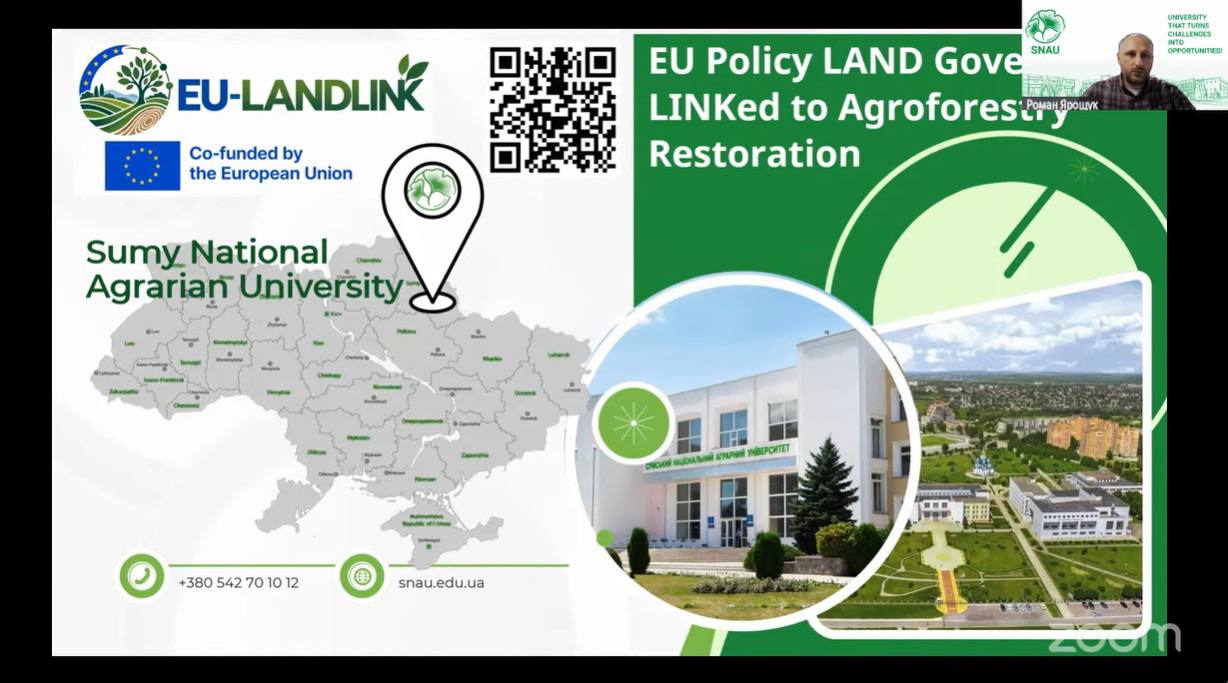
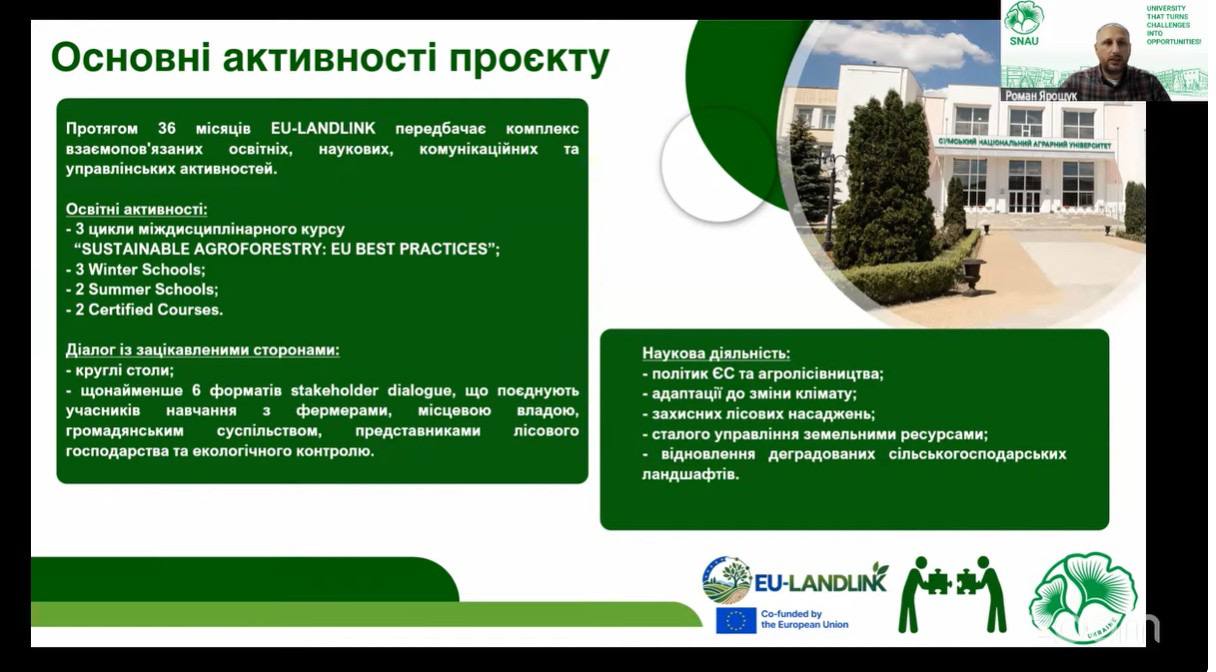
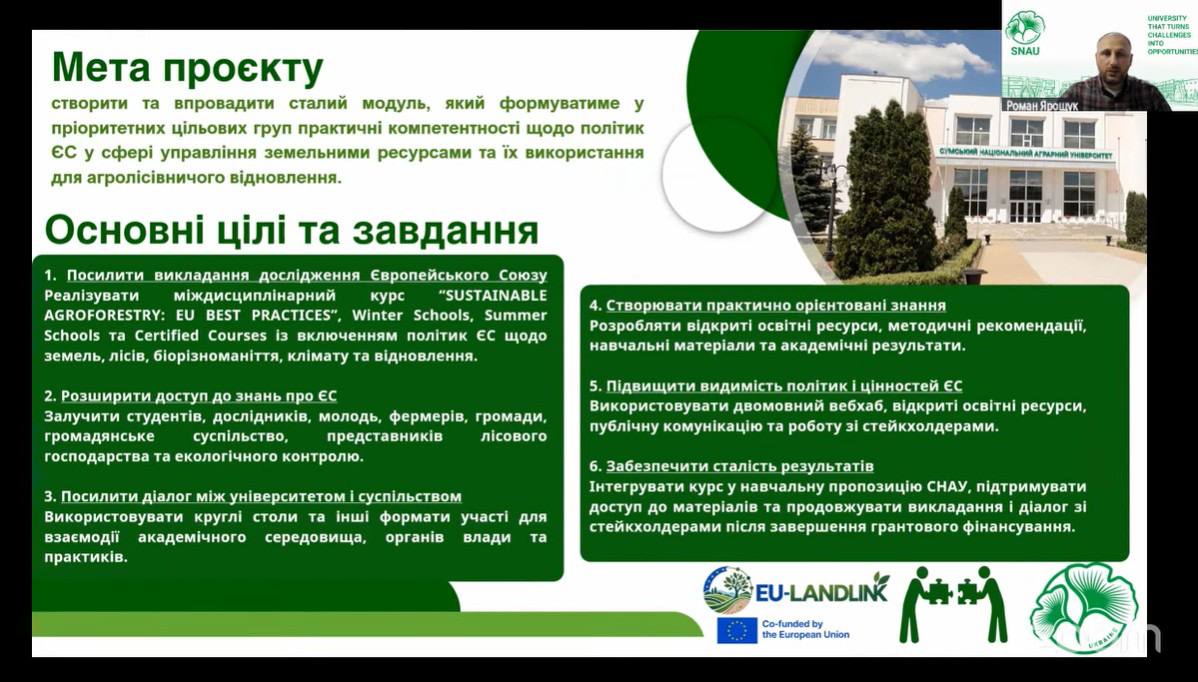
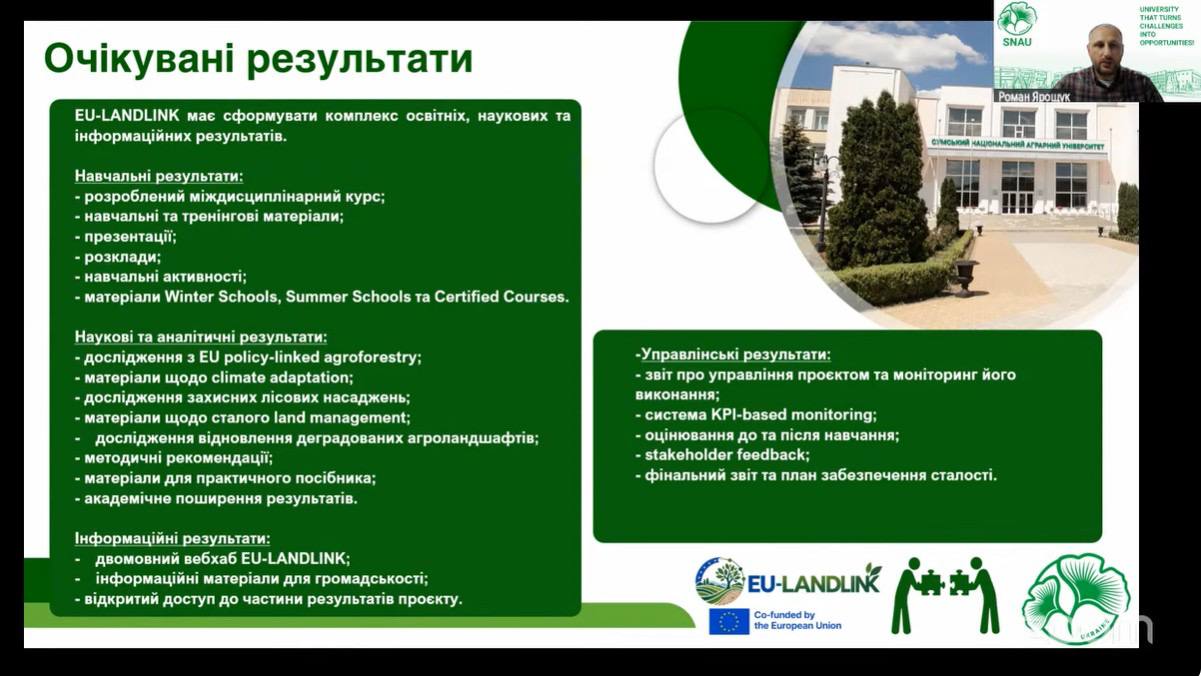
The EU-LANDLINK project (EU Policy LAND Governance LINKed to Agroforestry Restoration) aims to disseminate knowledge regarding European Union policies on land governance, agroforestry, and the restoration of degraded agricultural landscapes. Planned activities include an interdisciplinary training course, winter and summer schools, certified courses, scientific research, and engagement with farmers, local communities, government representatives, and environmental conservation professionals.
Both initiatives aim to extend knowledge about the European Union beyond the classroom, transforming it into a practical tool for students, researchers, and professionals. By integrating education, science, and societal engagement, they help build the competencies required for the sustainable management of natural resources and the restoration of degraded areas.
Erasmus Days 2026 took place from October 12 to 17 under the theme “Learning and Growing: Competencies for the Future.” The initiative served as an opportunity to highlight educational opportunities, innovations, and projects that continue to develop even under martial law. Participation in the webinar enabled SNAU to showcase its own work, engage in a professional exchange of experience, and discuss collaboration between projects. For the university, international cooperation represents an opportunity to integrate European expertise into the educational process, advance scientific research, and develop solutions vital to sustainable development and the future recovery of Ukraine.