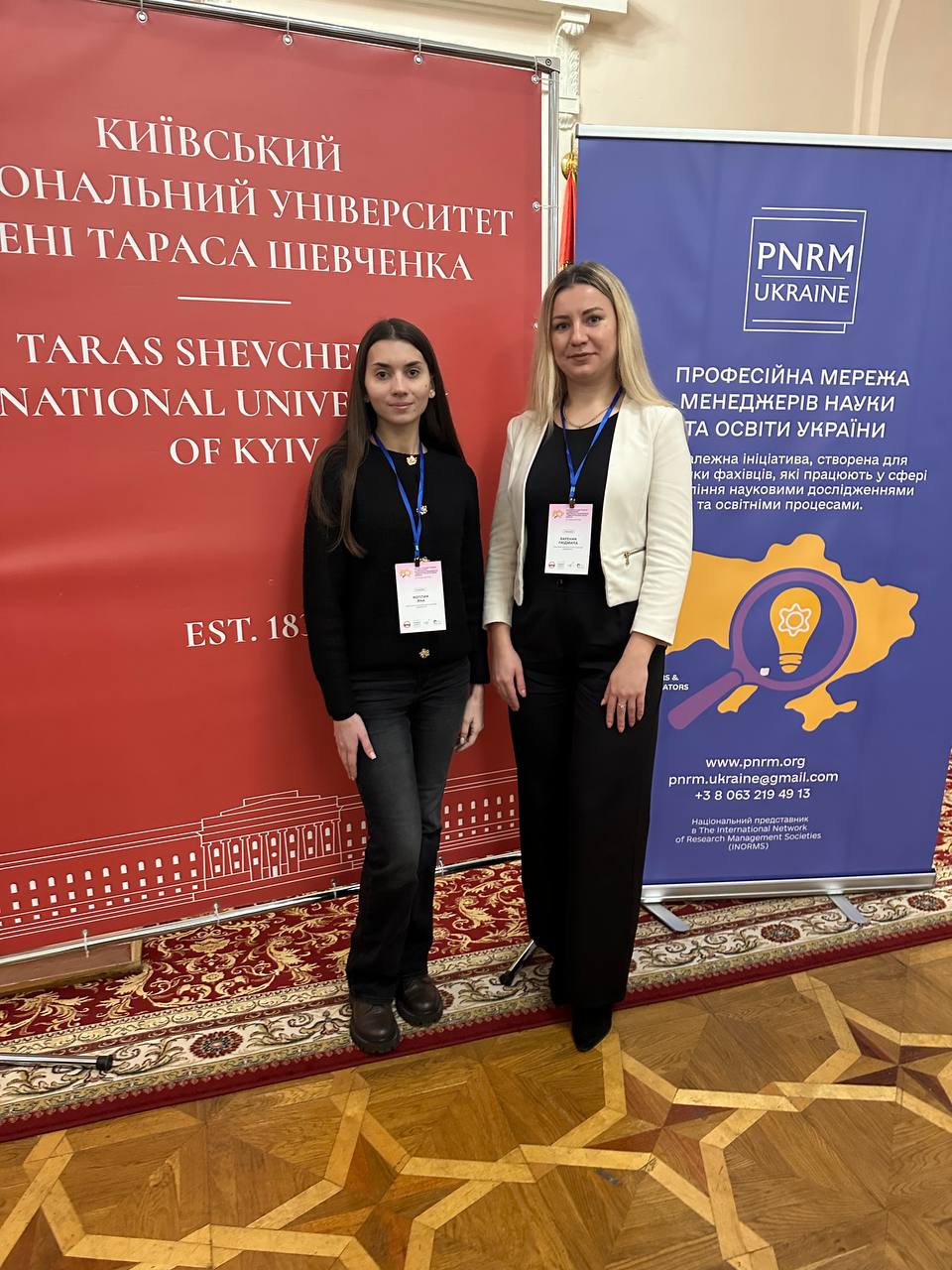
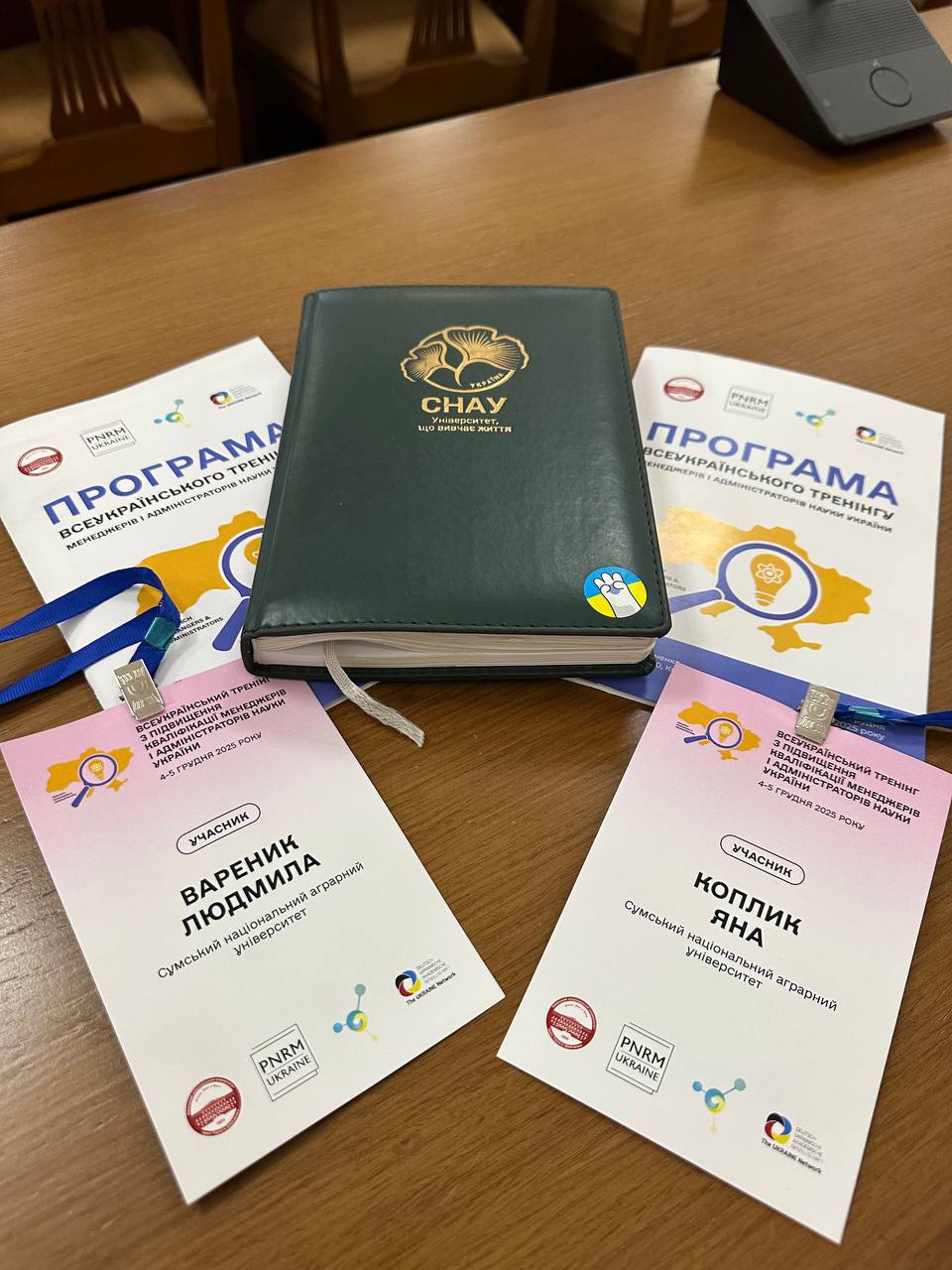
On December 4–5, Taras Shevchenko National University of Kyiv hosted a nationwide training session for science managers and administrators, bringing together representatives of Ukraine’s leading higher education and scientific institutions. Sumy National Agrarian University joined the event, presenting its professional team of specialists.
The forum was organized by the Professional Network of Science and Higher Education Managers of Ukraine “PNRM Ukraine” with the support of the Council of Vice-Rectors for Scientific Work of the Ministry of Education and Science of Ukraine, the German-Ukrainian Academic Society, the Horizon Europe Office in Ukraine, the National Research Fund of Ukraine, and other partner organizations. The event brought together more than 80 science managers from 40 higher education and scientific institutions, including vice-rectors, heads of scientific departments, project office specialists, andscientific research administrators.
The training program included four substantive modules and covered topics that are key to modern science, including: the role of science managers in the Ukrainian context and in Europe; the organization of science management in universities; practical aspects of the work of research department heads; national competitions and grants from the National Science and Education Foundation; the Horizon Europe program; budgeting for scientific projects; digital tools for science managers; compliance; leadership competencies; the importance of networking; opportunities offered by the COST program; and the exchange of best practices.
Sumy National Agrarian University was represented at the event by the head of the Centre for Collective Use of Scientific Equipment for the Latest Agricultural Technologies “Laboratory of Ecological Agriculture and Nature Management,” assistant professor at the Department of Biotechnology and Chemistry Lyudmila Varenyk, and senior researcher at the Centre, senior lecturer at the Department of Biotechnology and Chemistry Yana Koplyk.
Training participant Lyudmila Varenyk noted:
“The event became a valuable platform for professional exchange and deeper understanding of the role of science managers in modern universities. Live communication, the opportunity to ask practical questions, and hear the experiences of colleagues allow us to build qualitatively new approaches to the organization of scientific activity. Such trainings form a community of strong, competitive, and open-minded science managers in Ukraine.”
The participation of the SNAU in the all-Ukrainian training was an important step in strengthening the professional potential of the university, expanding the network of partnerships, and introducing modern practices of scientific activity management. Such events contribute to the development of the academic environment and open up new opportunities for the institutional growth of the university.