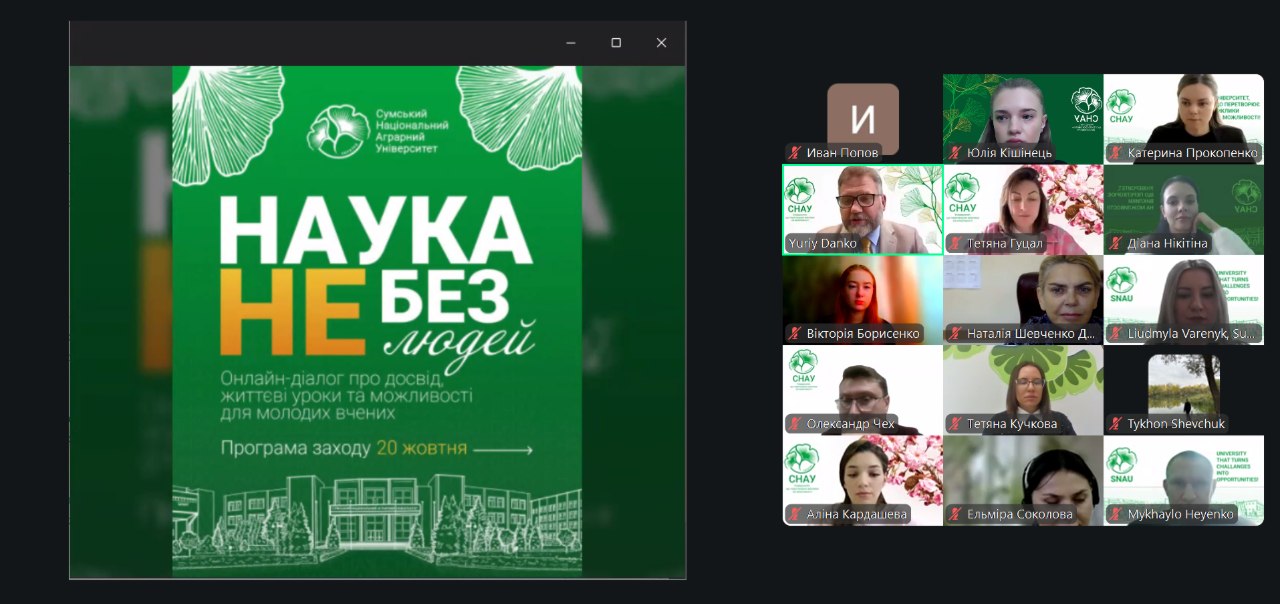
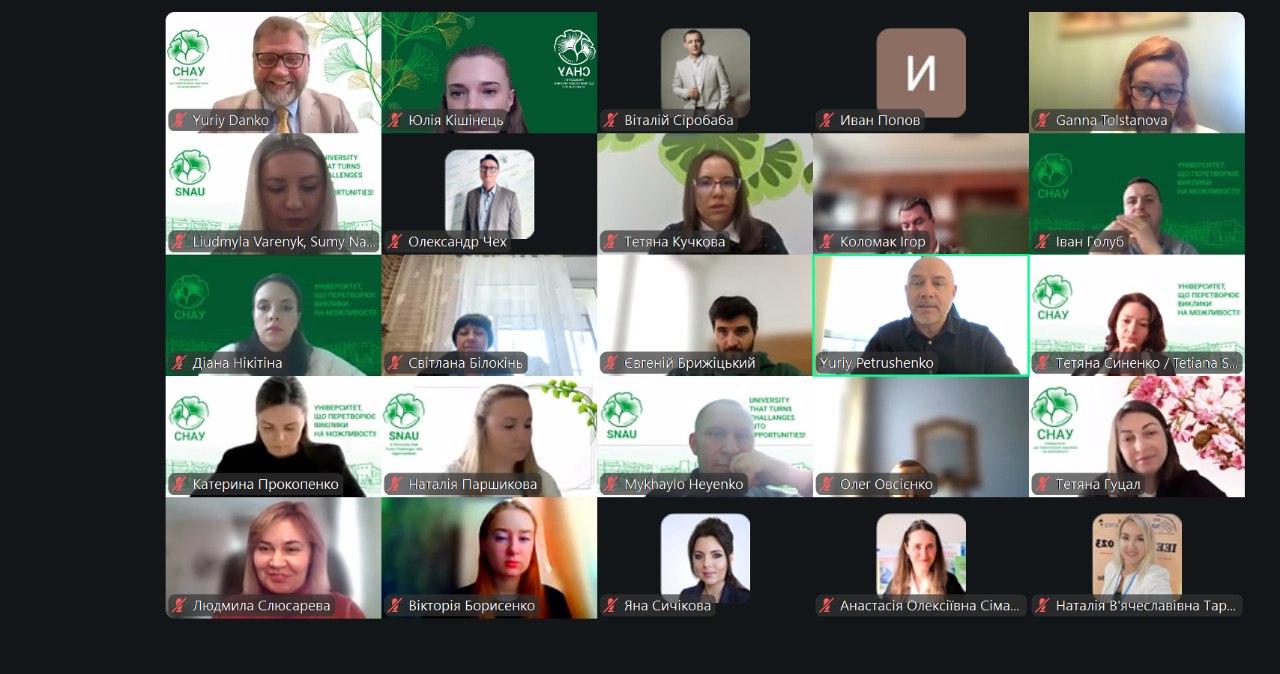
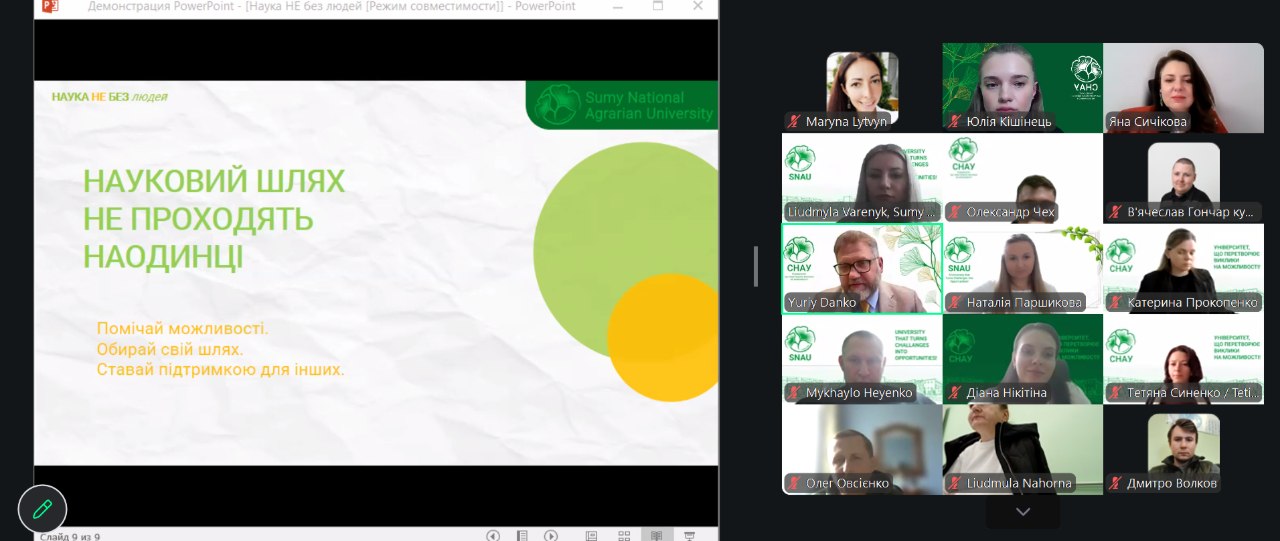
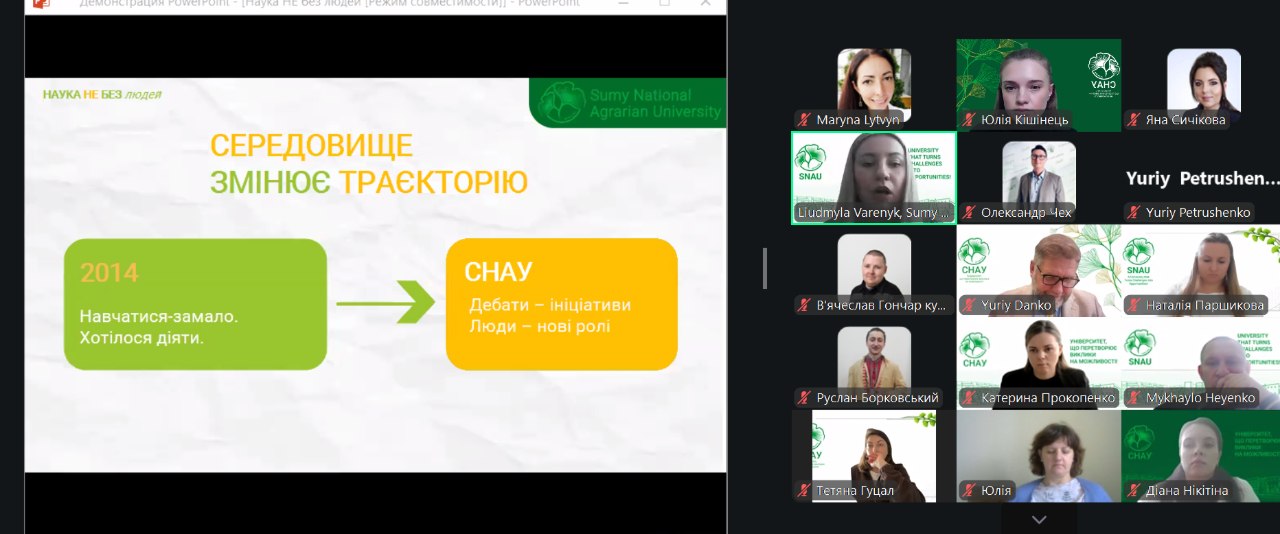
How does one build a scientific career, find like-minded peers, establish a professional reputation, and take advantage of opportunities to support scientific work? These topics were discussed on October 20 during an online dialogue titled “Science Is NOT Without People,” organized by Sumy National Agrarian University (SNAU).
The event focused on the experiences of researchers who have navigated their own paths—from their initial studies to professional recognition—and who now influence the development of science in Ukraine. Representatives from universities, the Ministry of Education and Science of Ukraine, and various scientific institutions shared not only their professional achievements with young SNAU scientists but also stories about the decisions they made, the challenges they faced, the mistakes they learned from, and the people who played a pivotal role in their professional growth.
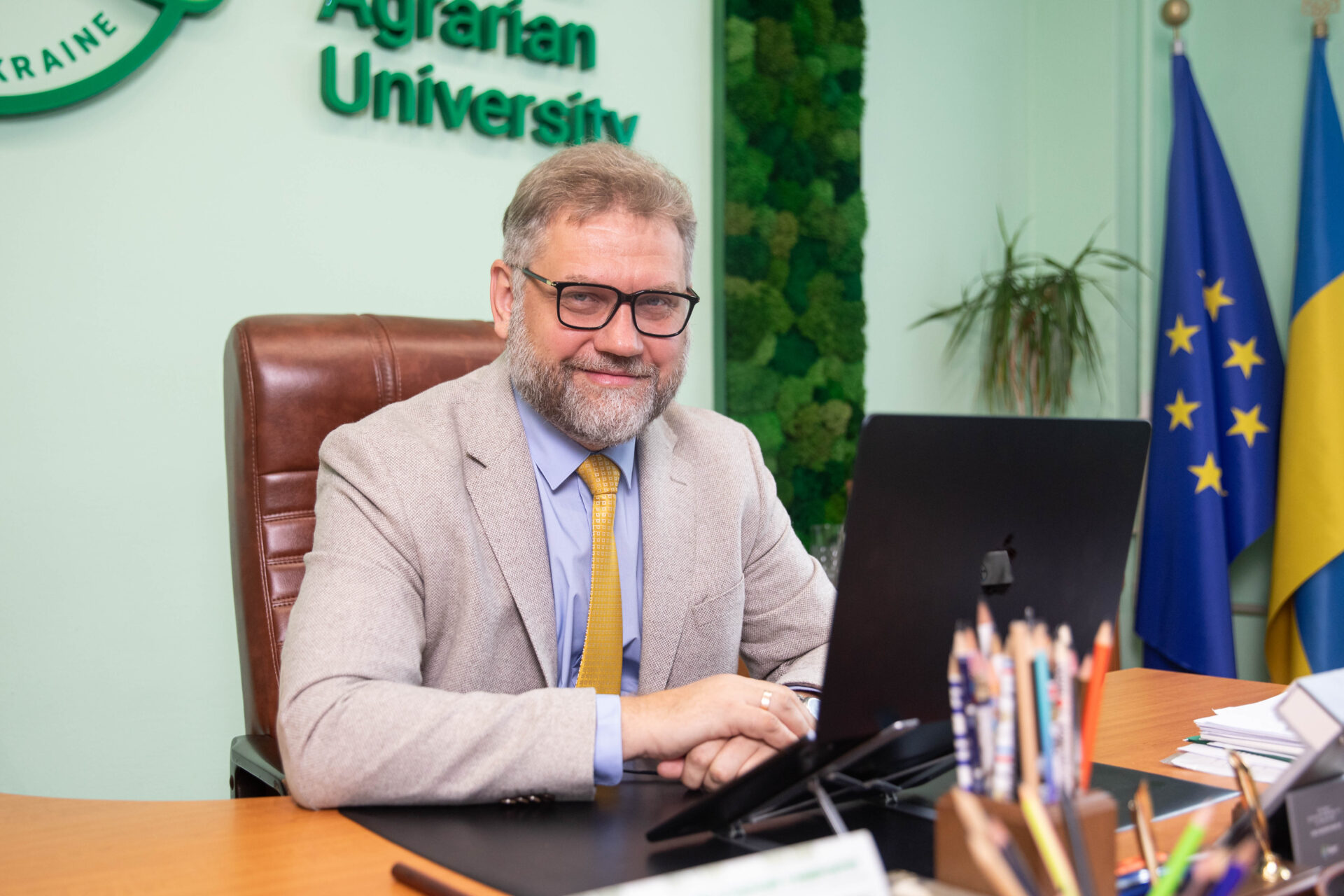
The event was opened by Yurii Danko, Doctor of Economics, Professor, and Vice-Rector for Research and International Affairs at SNAU. He welcomed the participants and emphasized the importance of dialogue between different generations of scientists.
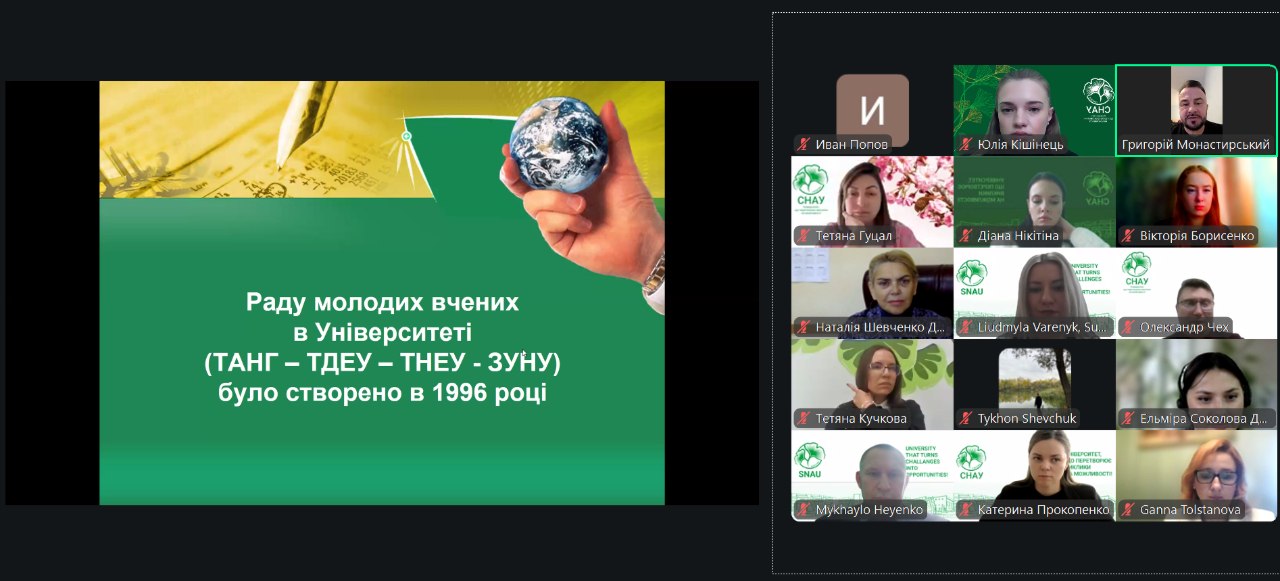
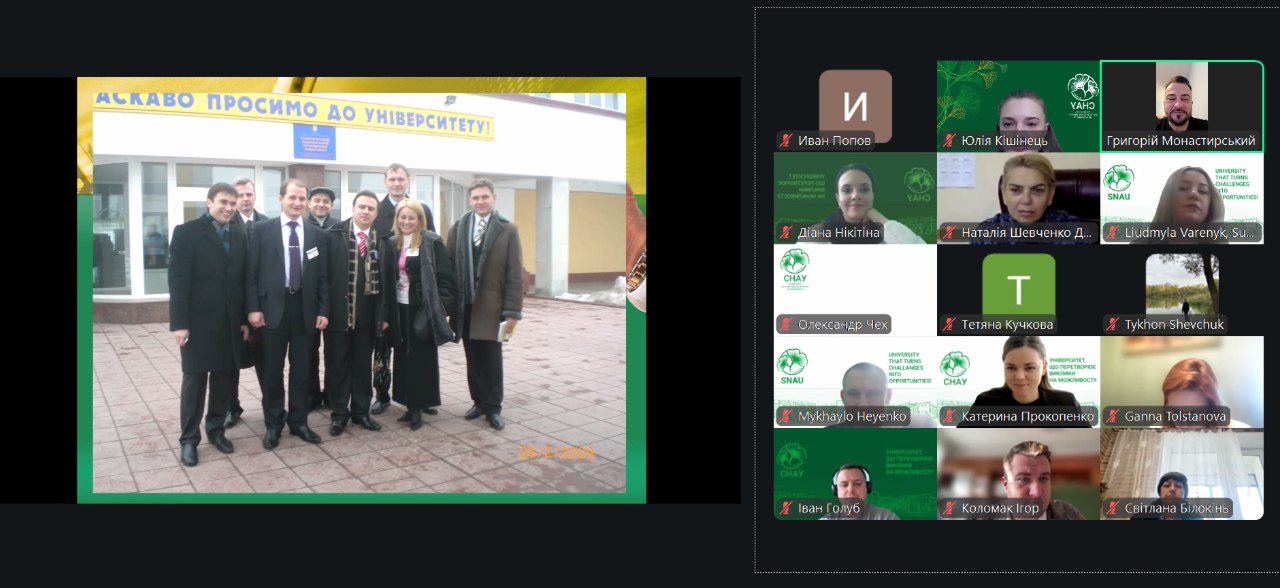
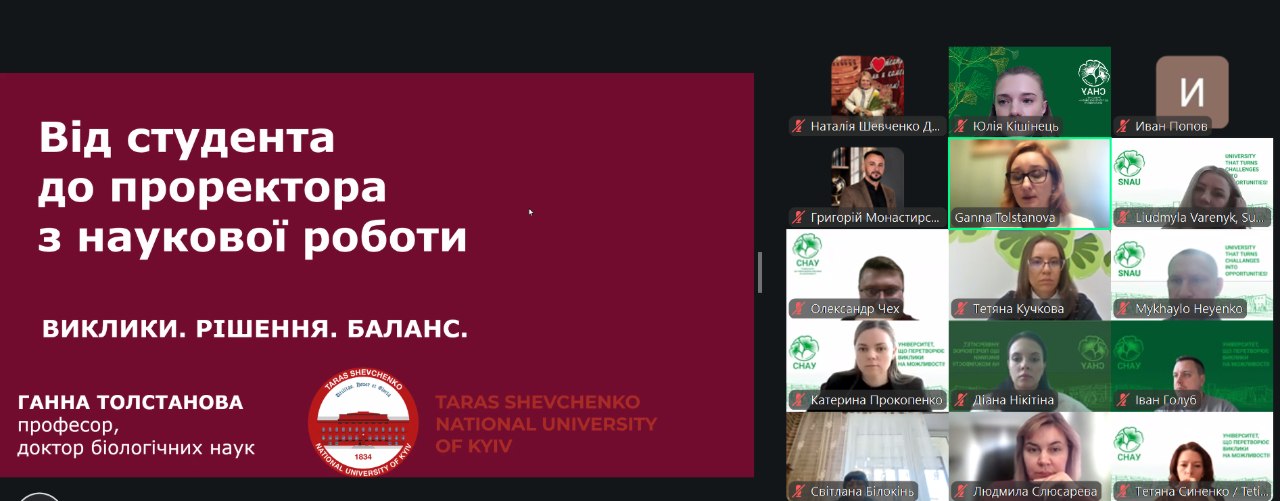
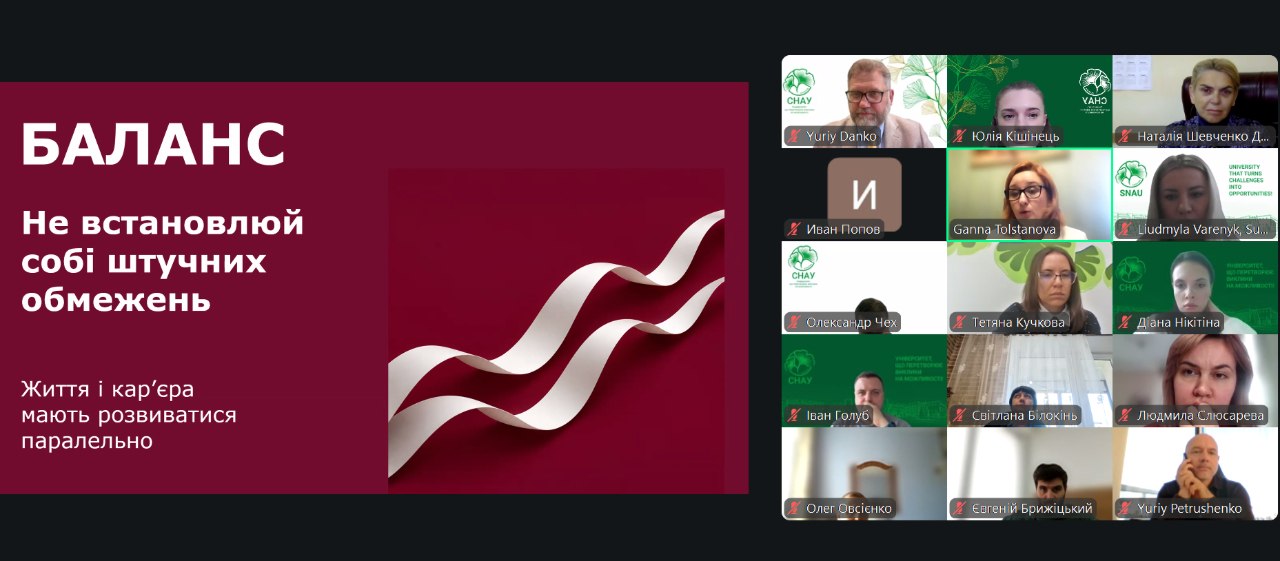
Hryhorii Monastyrskyi, Doctor of Economics and Professor at West Ukrainian National University, explained how a professional initiative can evolve into a community that brings people together for years. Citing the creation of a Council of Young Scientists as an example, he demonstrated how collaborative work helps develop leadership skills, build professional networks, and foster an environment of mutual support. A central theme in his account was the friendship that developed among researchers: connections that began through shared work eventually grew into strong, lasting relationships that endure to this day. Hanna Tolstanova—Doctor of Biological Sciences, Professor at the Educational and Scientific Center “Institute of Biology and Medicine” of Taras Shevchenko National University of Kyiv—spoke about her personal journey from student to Vice-Rector for Research. She shared insights into her professional growth, discussed the challenges she faced and the critical decisions she made, and reflected on finding a balance between career ambitions and personal life. Her story demonstrated that pursuing professional goals does not necessarily require sacrificing other essential aspects of one’s life.
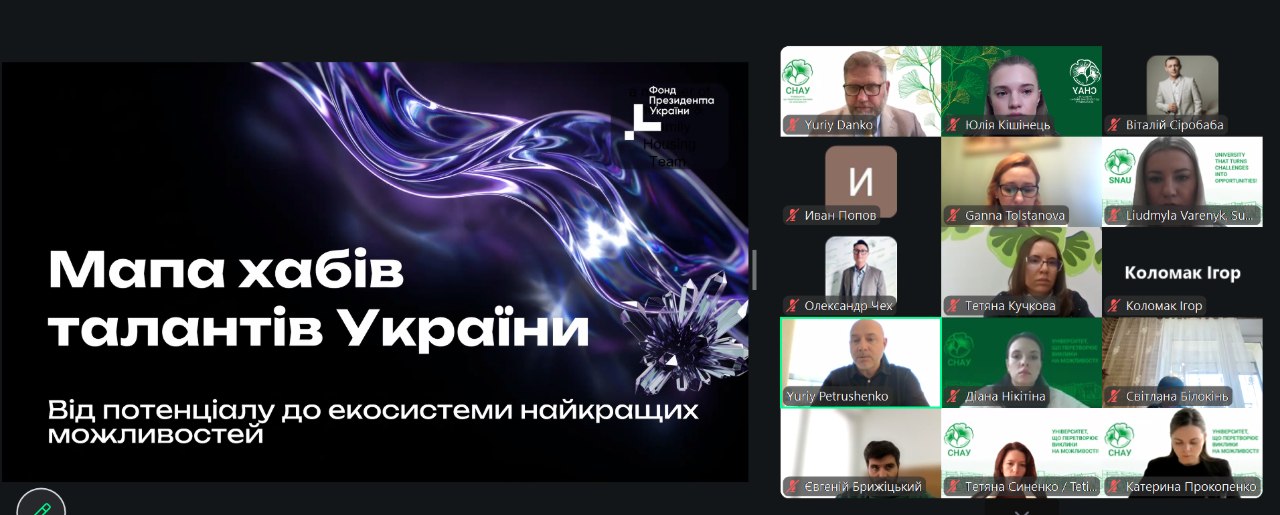
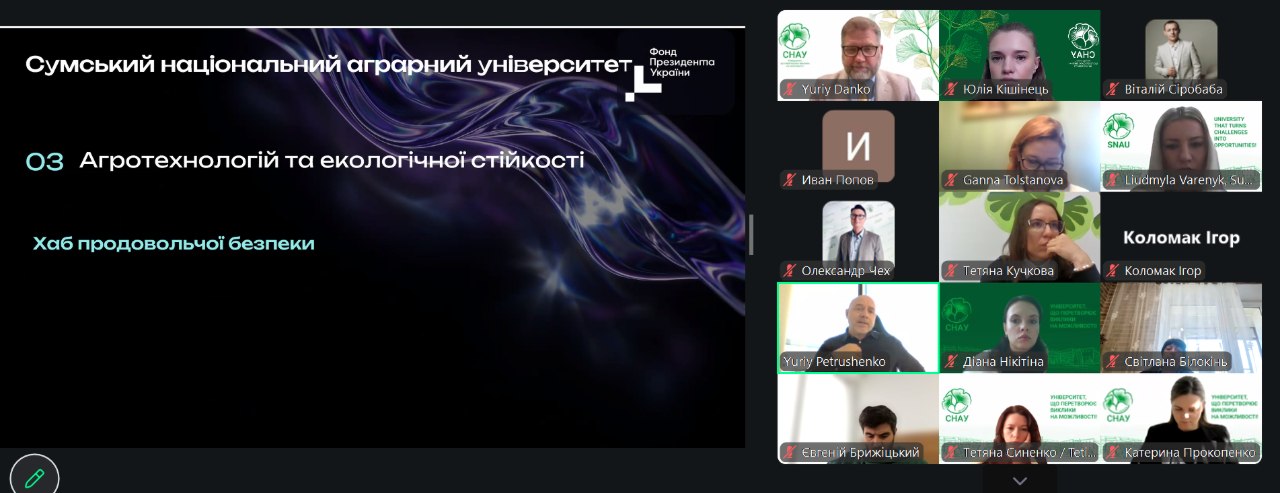
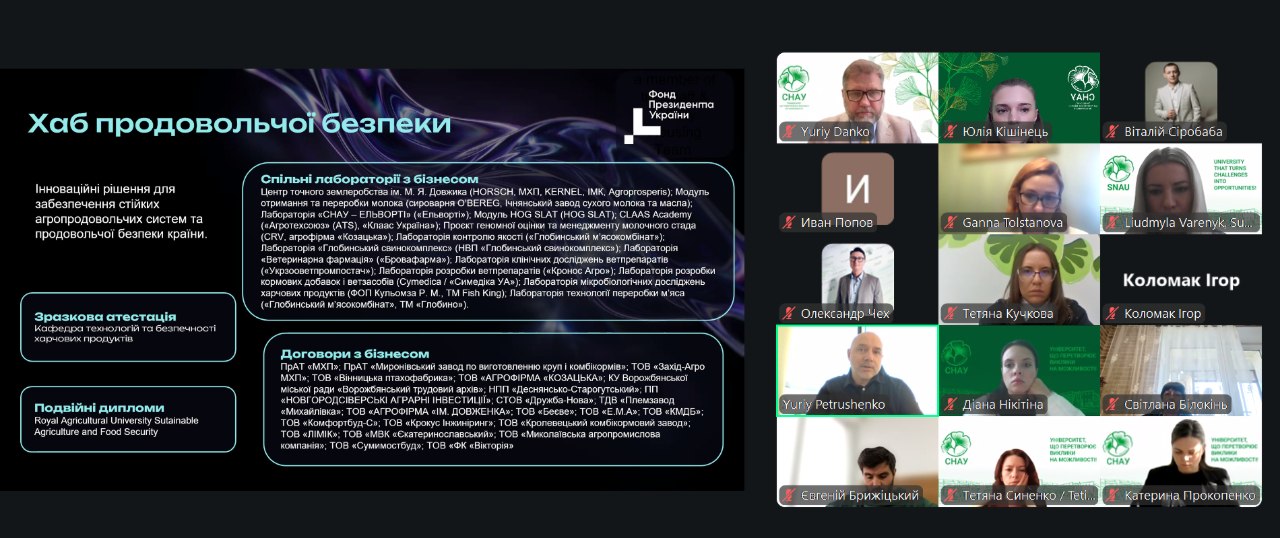
Yurii Petrushenko—Doctor of Economics, Professor, and Director of the President of Ukraine’s Fund for the Support of Education, Science, and Sports—presented “talent development hubs” as a tool for unlocking human potential within universities. These centers facilitate the connection of experts, the identification of partners, and the creation of an environment where research ideas can be brought to life. In this context, the discussion touched upon the Food Security Hub at SNAU (Sumy National Agrarian University) and the university’s collaboration with the Fund—an example of how university initiatives can align scientific capabilities with the pressing needs of society.
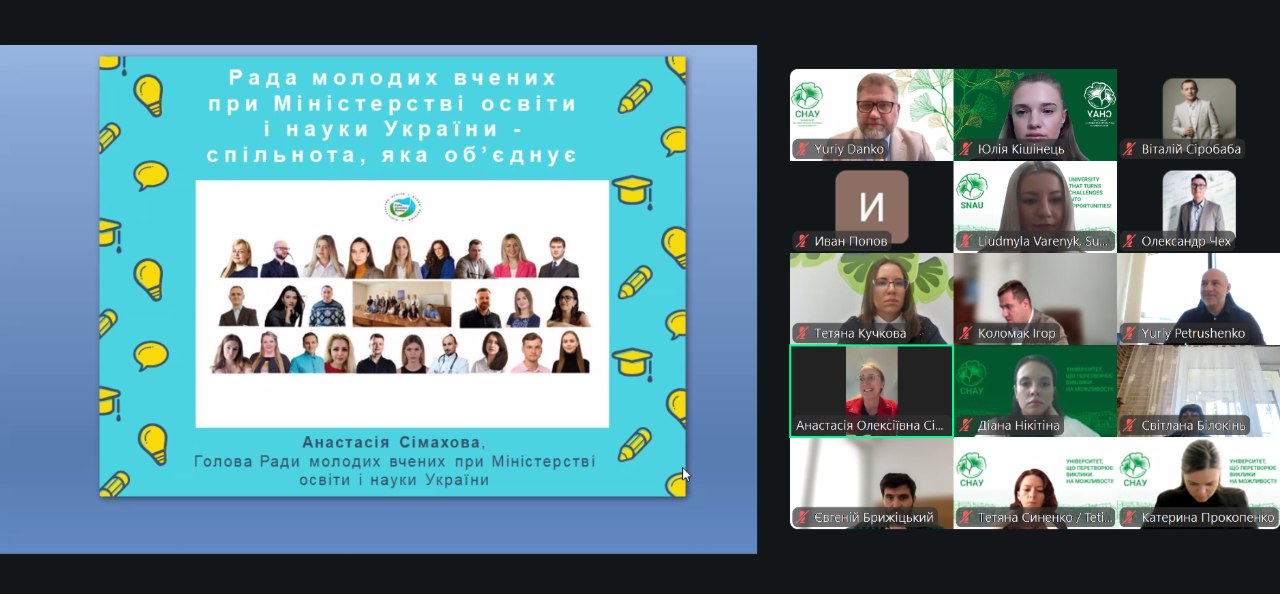
Anastasiia Simakhova—Doctor of Economics, Professor at the National Aviation University, and Chair of the Council of Young Scientists—spoke about the activities of the Council, which operates under the Ministry of Education and Science of Ukraine. She outlined the community’s key areas of focus and its role in supporting young researchers and fostering professional collaboration.
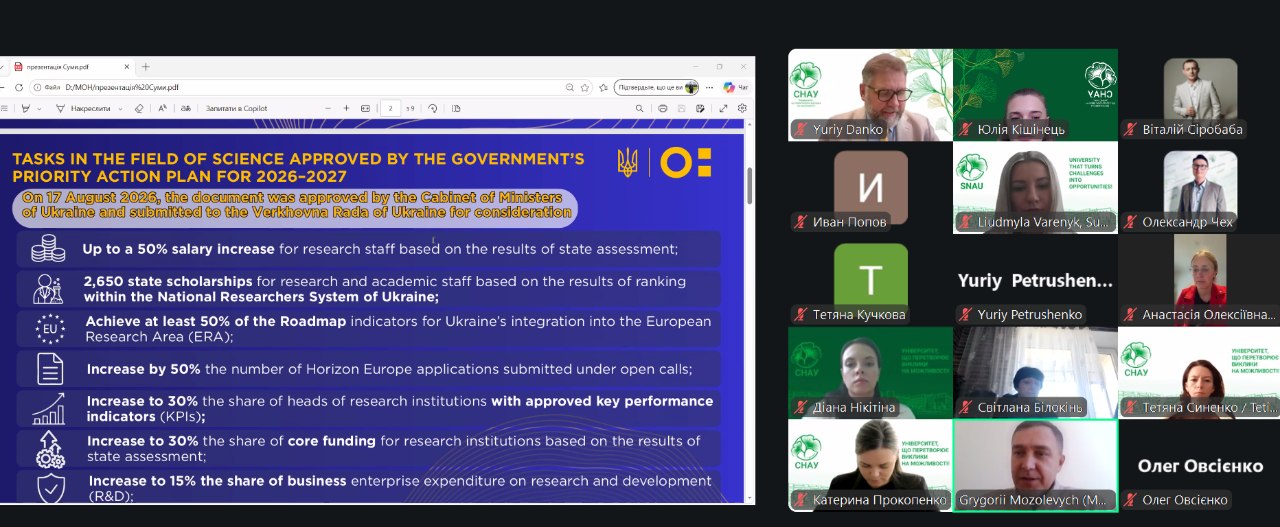
Hryhorii Mozolevych—Candidate of Technical Sciences, Associate Professor, and Director General of the Directorate for Science Development at the Ministry of Education and Science of Ukraine—provided an overview of state policy regarding the support of science. His presentation complemented the personal stories shared by the scientists by offering a perspective on the state mechanisms and institutional conditions that shape the development of the scientific sphere.
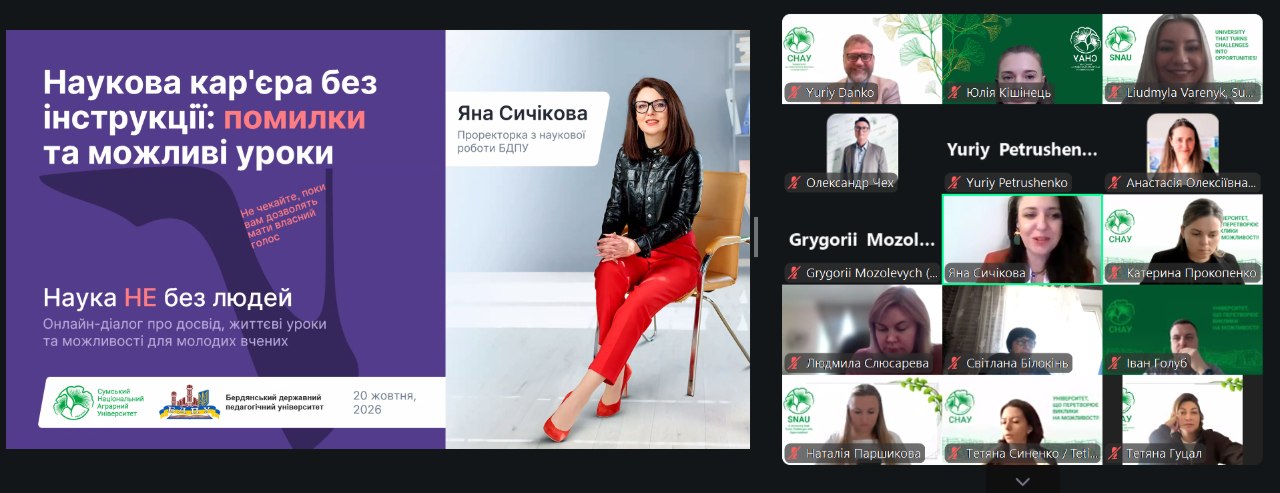
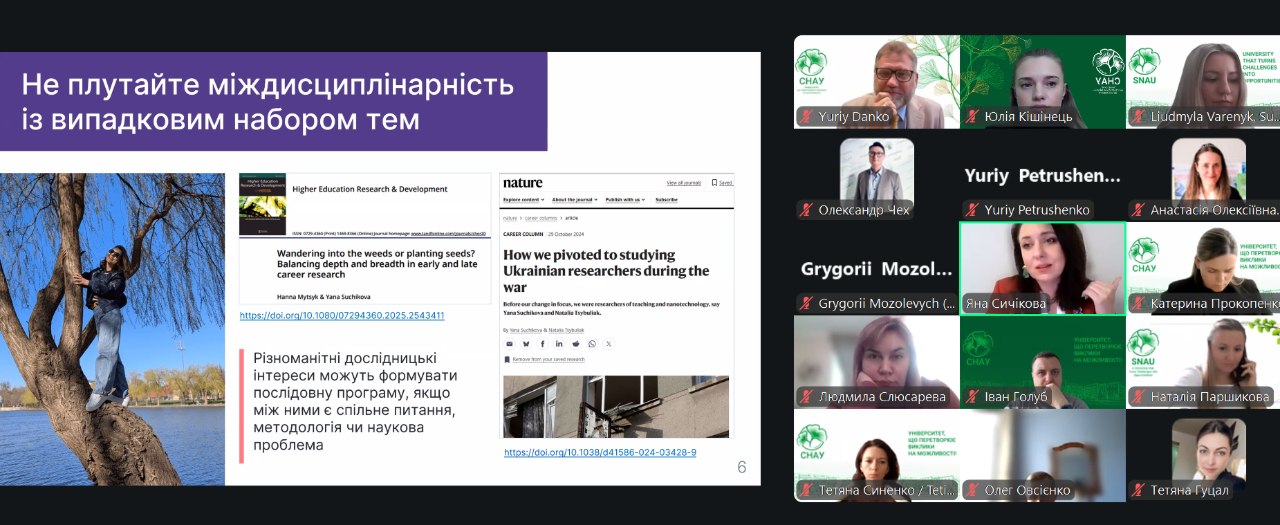
Yana Sychikova—Doctor of Technical Sciences, Professor, and Vice-Rector for Research at Berdyansk State Pedagogical University—shared lessons from her own scientific career. She spoke about the importance of a researcher’s autonomy, the readiness to defend a well-reasoned position, and the ability to learn from one’s mistakes. She also focused specifically on interdisciplinarity, emphasizing that combining different fields of research should be rooted in a shared scientific question, methodology, or research problem, rather than being a random collection of topics.
In a post summarizing the meeting, Yana Sychikova articulated a point crucial for the professional development of any young scientist:
“Having a voice does not come automatically with a job title or an academic rank. Developing the ability to use that voice responsibly is a lifelong process.”
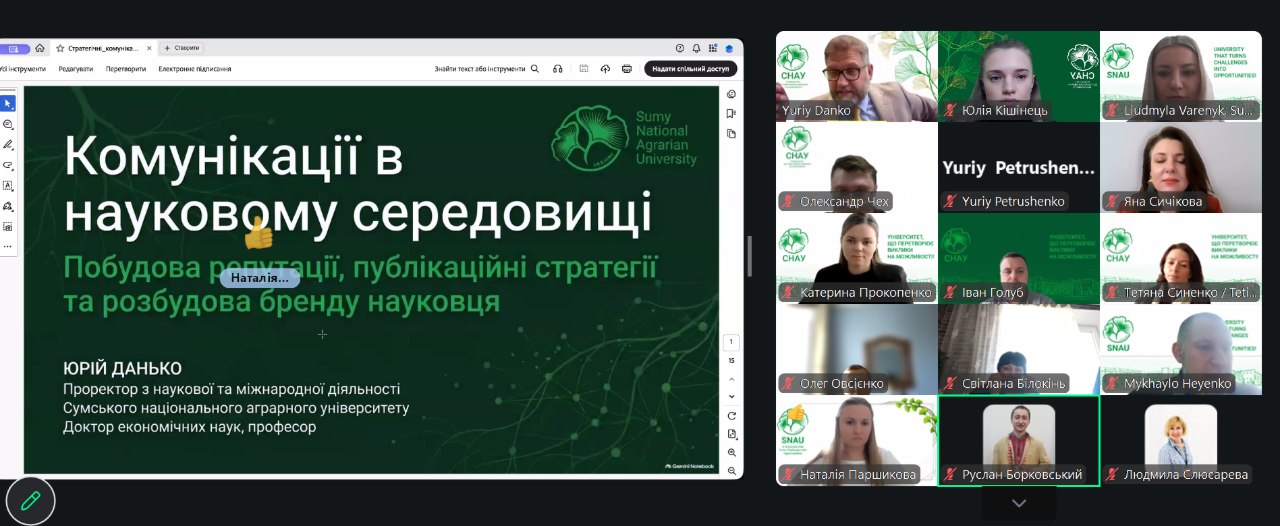
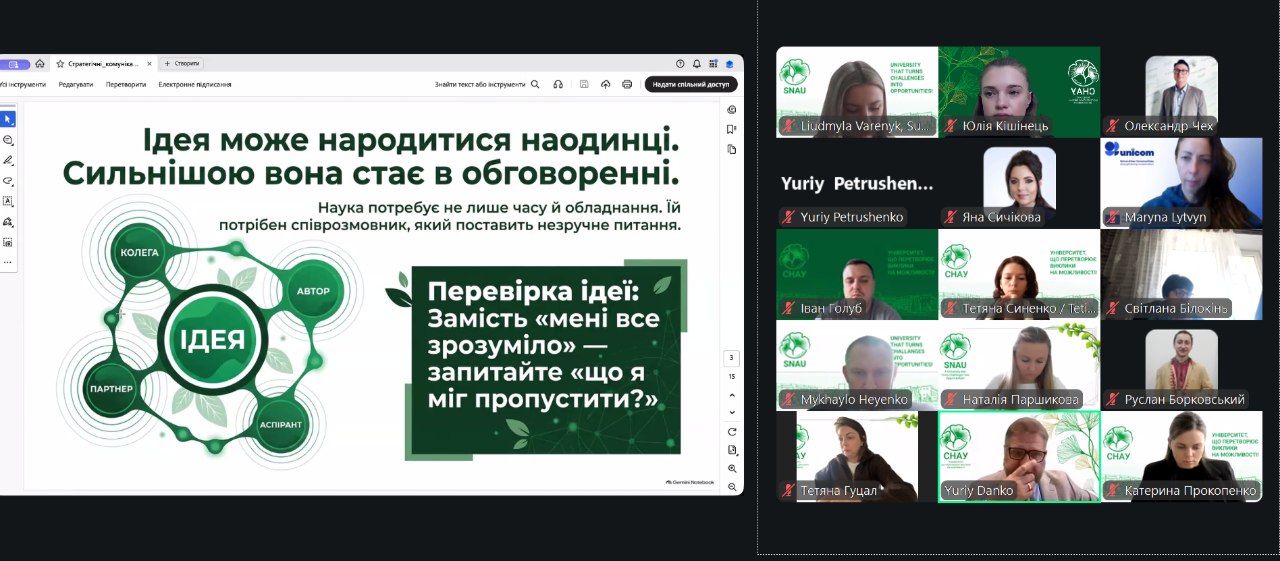
Yurii Danko—Doctor of Economics, Professor, and Vice-Rector for Research and International Affairs at SNAU—dedicated his presentation to communication within the scientific community, the cultivation of an academic reputation, publication strategies, and the development of a personal brand as a scientist. He underscored the importance of professional dialogue in the evolution of research ideas: while a scientific concept may originate from individual work, it gains strength through discussion, constructive questioning, and interaction with colleagues. The ability to present one’s own work, listen to alternative perspectives, and critically evaluate one’s own ideas constitutes an essential part of a modern researcher’s professional development.
The program concluded with remarks from Liudmyla Varenyk, PhD, Head of the Center for Shared Use of Scientific Equipment for Advanced Agricultural Technologies (“Laboratory of Ecological Farming and Nature Management”), Chair of the Council of Young Scientists under the Sumy Regional State Administration, and the meeting’s moderator. She focused on the themes of choices, opportunities, and the people who shape a researcher’s professional development—a topic that tied together the diverse stories and experiences shared throughout the discussion.
The online dialogue, titled “Science Is NOT Without People,” offered young scientists from the Sumy National Agrarian University (SNAU) a chance to learn from those who have already navigated the path of professional growth, achieved significant milestones, and continue to advance Ukrainian science. The speakers’ stories demonstrated that scientific achievements are built not only on research and publications but also on personal choices, the willingness to stand by one’s convictions, professional networks, and the support of the scientific community.
Sumy National Agrarian University extends its gratitude to the speakers for their openness and insightful discussion, and to the participants for their commitment to the development of the scientific community.