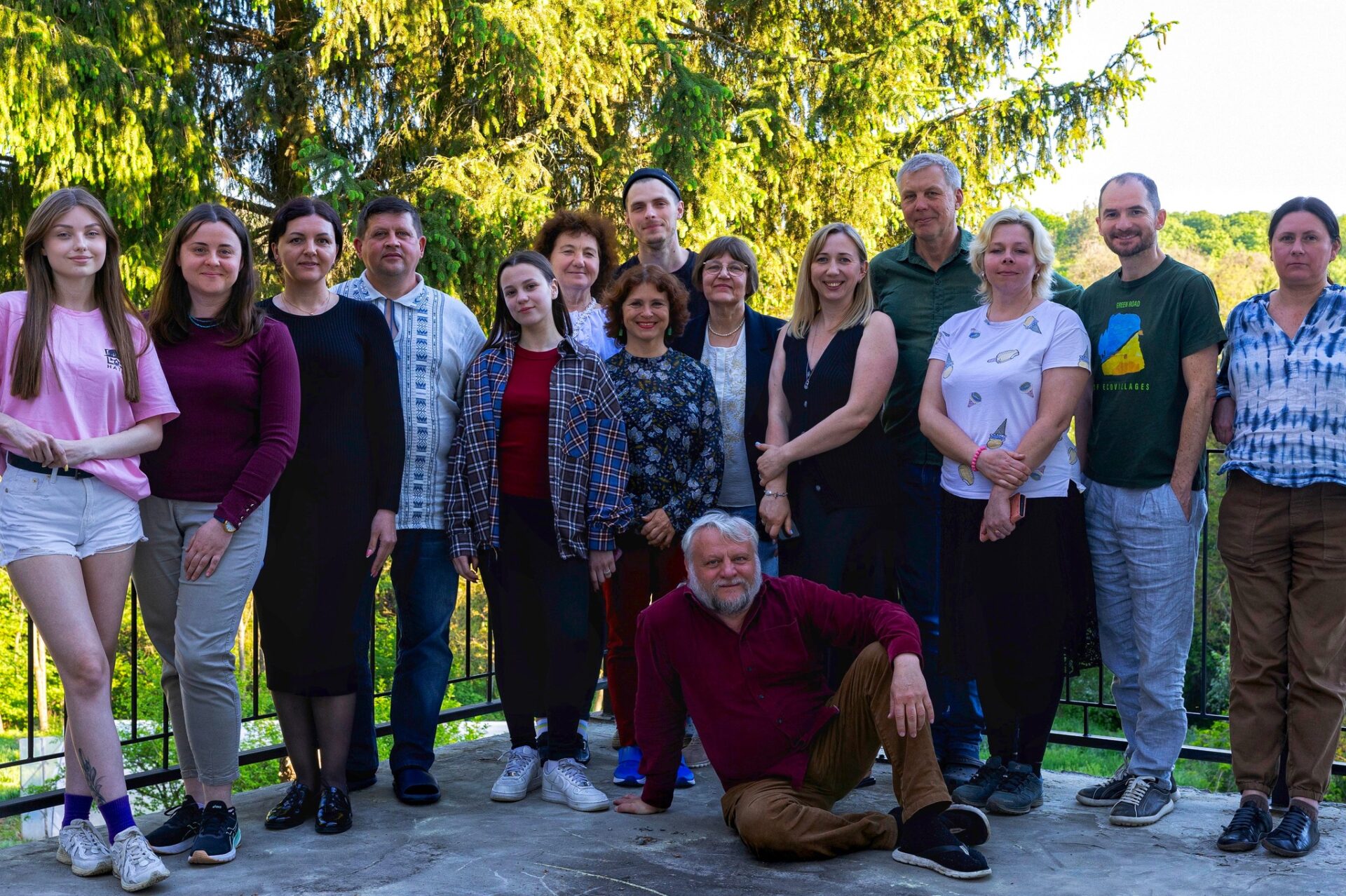
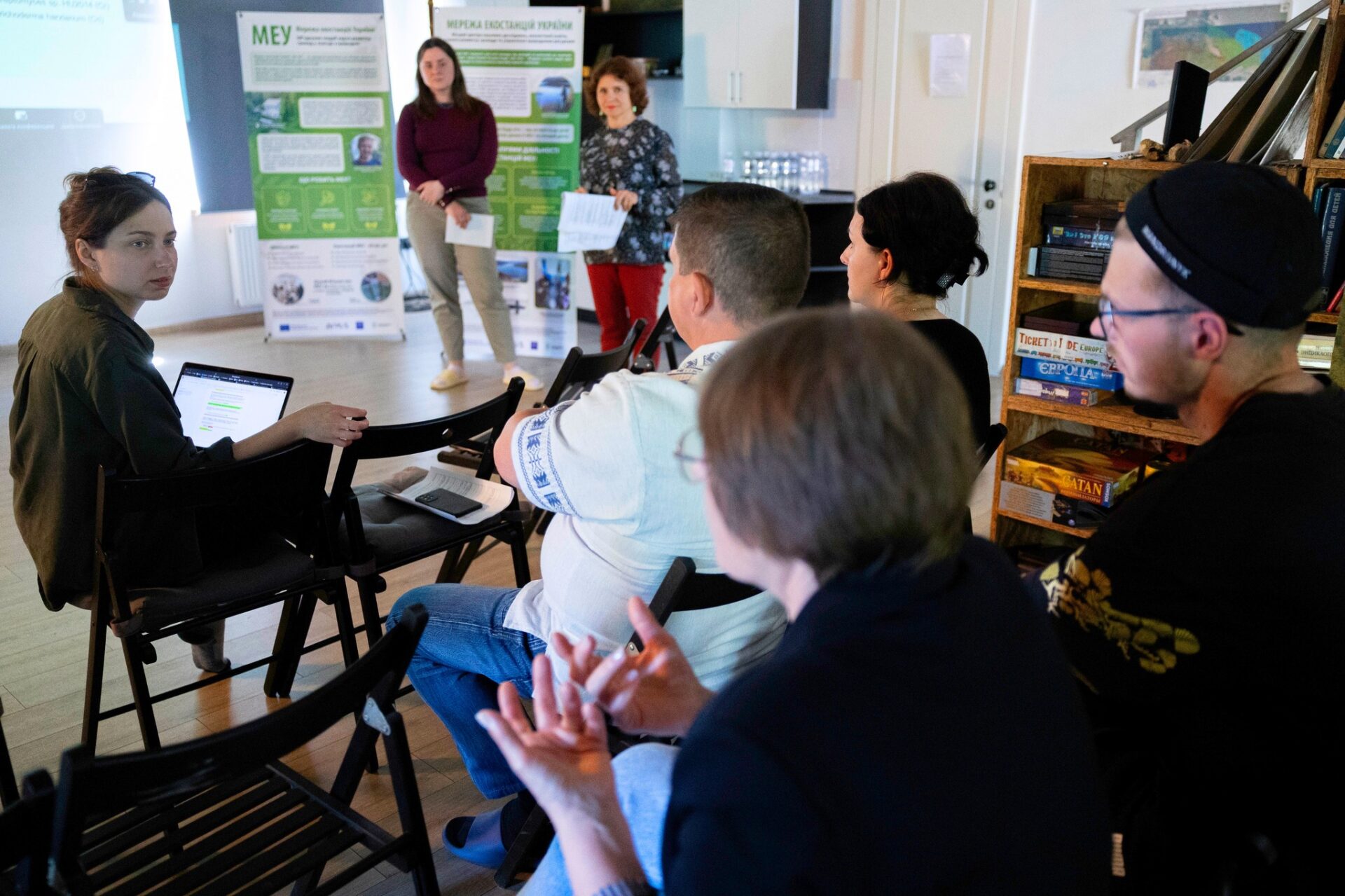
On May 15–17, 2026, the Soil Assembly conference titled “Soil Regeneration in Conditions of War and Post-War Recovery” was held at the “Hlyboky Balyky” Ecological Research Station, bringing together scientists, environmentalists, farmers, artists, and civil society representatives to address the issue of soil degradation caused by military operations.
The event was organized by the NGO “Network of Ecological Stations of Ukraine” as part of the SoilTribes project, funded by the European Union.
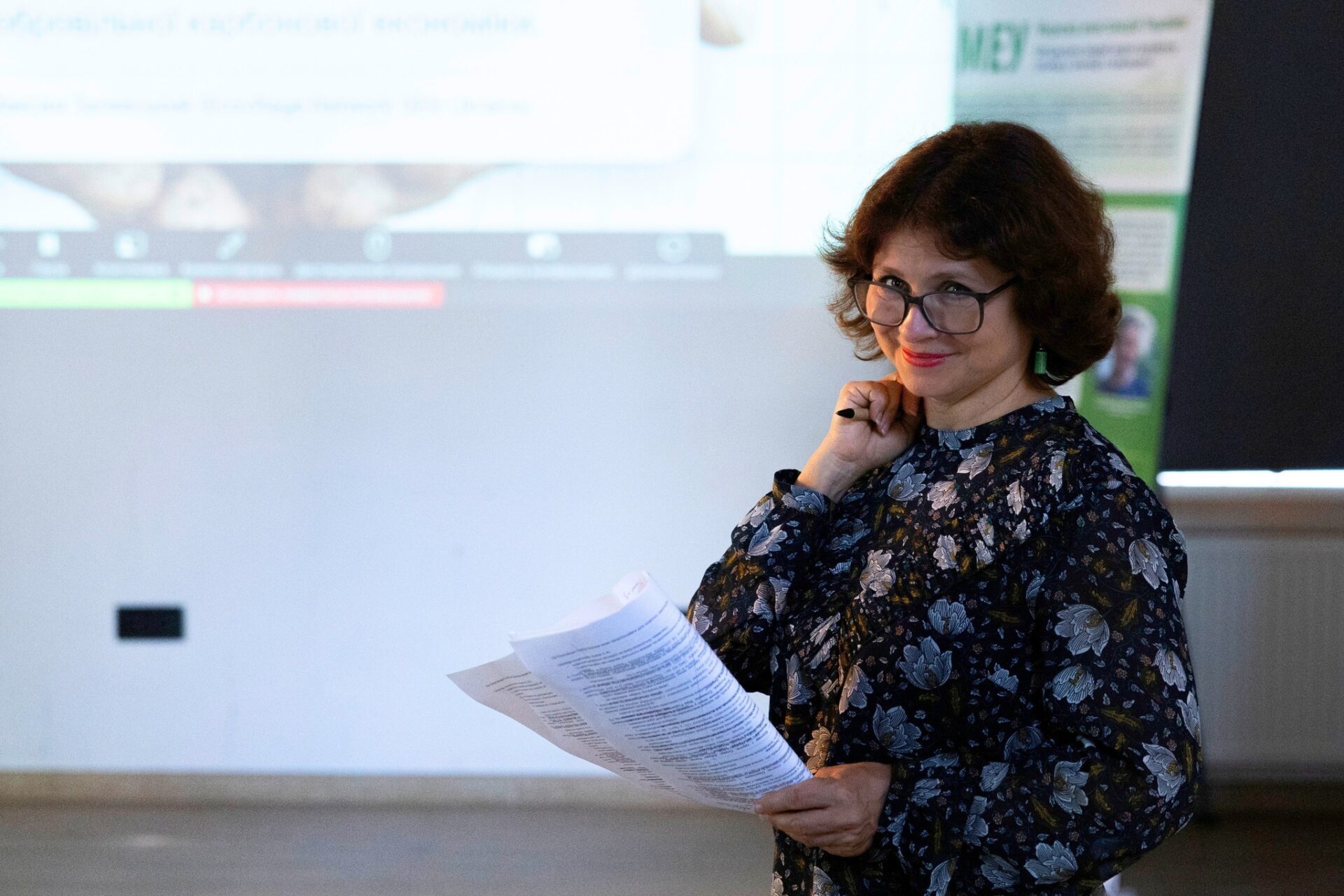
The conference was moderated by Elina Zakharchenko, Ph.D. in Agricultural Sciences and Associate Professor in the Department of Agricultural Technologies and Soil Science at the Faculty of Agricultural Technologies and Natural Resource Management of Sumy National Agrarian University.
During the conference, participants presented the results of current research, discussed practical approaches to the regeneration of affected areas, and shared international experience in soil restoration. Experts from the BTU Institute of Biotechnology, Zürcher Hochschule der Künste, WWF-Ukraine, the “Permaculture in Ukraine” Public Association, and the Global Ecovillage Network Ukraine joined the event.
Research by SNAU scholars was also featured among the conference’s key topics. In particular, Elina Zakharchenko presented a paper titled “Comparison of Soil Conditions in Impact Zones in the Sumy, Chernihiv, Kharkiv, and Donetsk Regions,” while Olena Melnyk—a researcher at the SNAU Research Department and a researcher at Bern University of Applied Sciences—shared examples of international experience, including the results of a project on war-damaged soils.
During the discussions, participants emphasized that there is no universal method for soil restoration, as war contaminates territories unevenly. That is precisely why regeneration requires scientific monitoring, nature-based solutions, and active community involvement.
Among the most effective approaches to remediation, participants highlighted combined methods, including the use of biochar, plant and animal residues, functional microbial consortia, permaculture practices, and land art projects as a tool for community-led regeneration of areas.
Based on the conference outcomes, four key areas for further work were identified:
The event culminated in the formation of a cross-sectoral working network, whose members have already drafted a joint memorandum outlining priority steps for soil restoration.
Sumy National Agrarian University sincerely thanks Elina Zakharchenko for moderating the event, providing expert summaries of the conference, and actively showcasing SNAU’s scientific potential in the international professional community.