Sumy National Agrarian University has graduated its first accessibility specialists for communities in the Sumy region. This was one of the first tangible results after the Ministry of Community and Territorial Development of Ukraine designated SNAU as one of ten higher education institutions in Ukraine authorized to train such specialists.
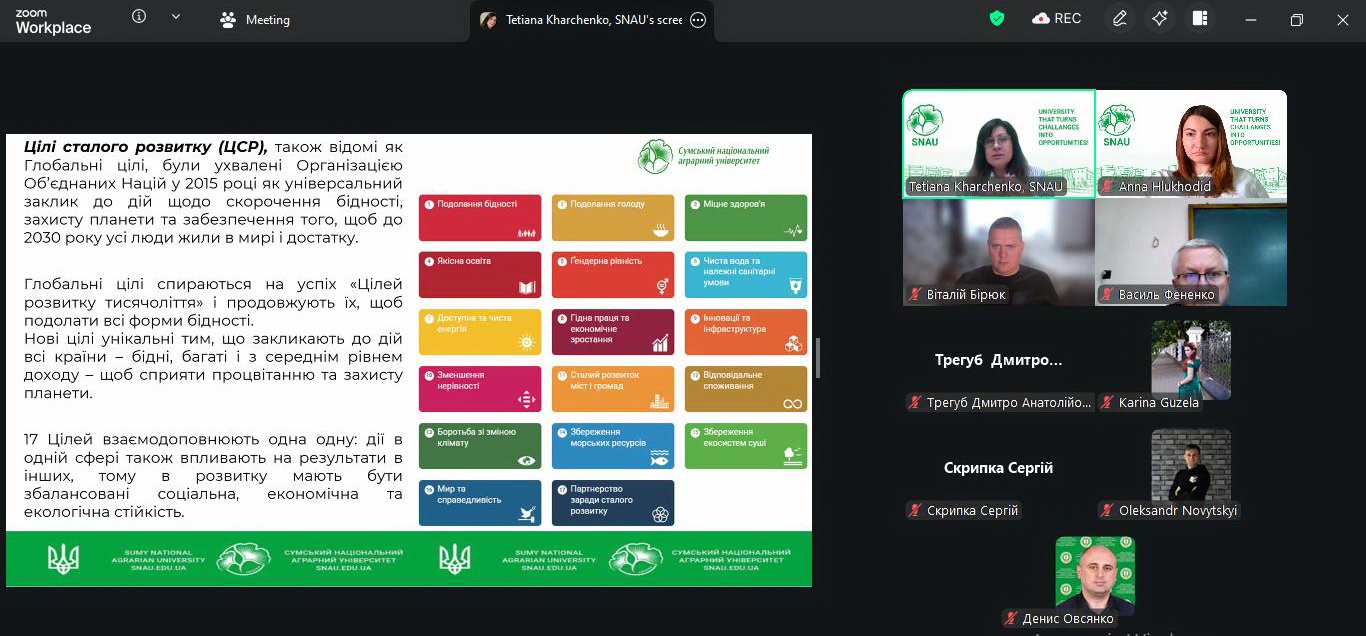
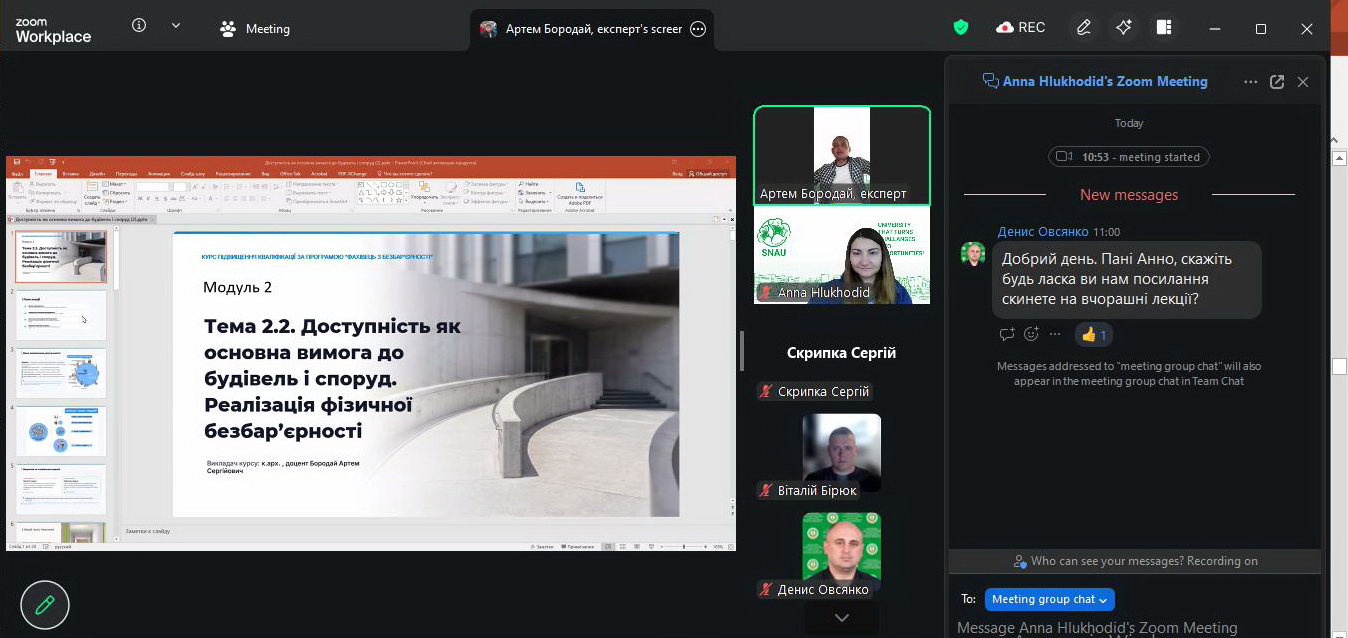
The professional development course “Accessibility Specialist” took place from June 15 to 26, 2026. Over the course of two weeks, representatives of local communities in the Sumy region learned modern approaches to creating an accessible environment, gaining the knowledge and practical skills necessary to develop barrier-free spaces in their communities.
The training program combined in-depth theoretical instruction with hands-on work. It was developed by Volodymyr Bykov, an Honored Architect of Ukraine, and Oleksandr Novytskyi, a certified energy auditor and Candidate of Technical Sciences, who designed the program in accordance with current government requirements and the practical needs of communities.
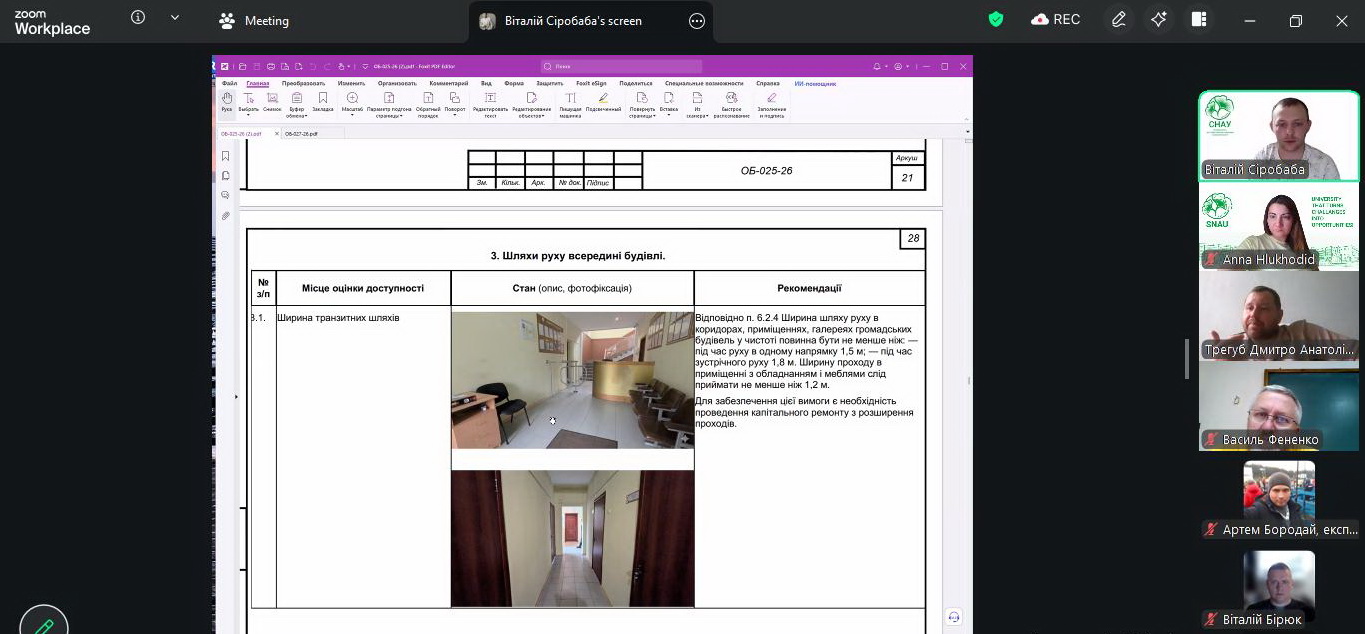
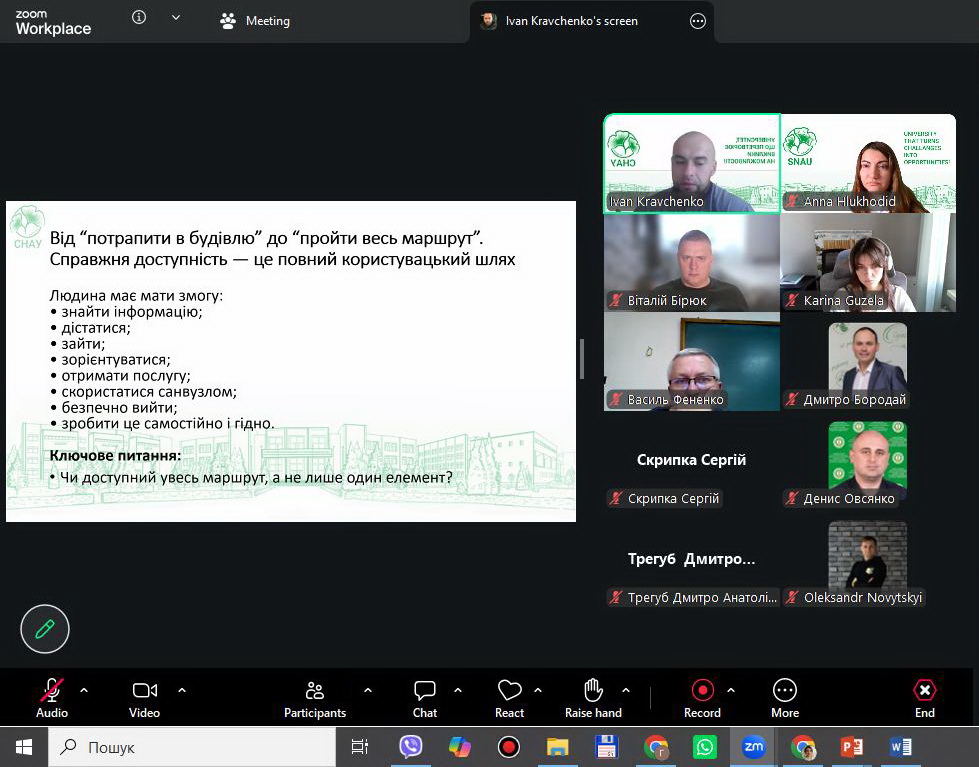
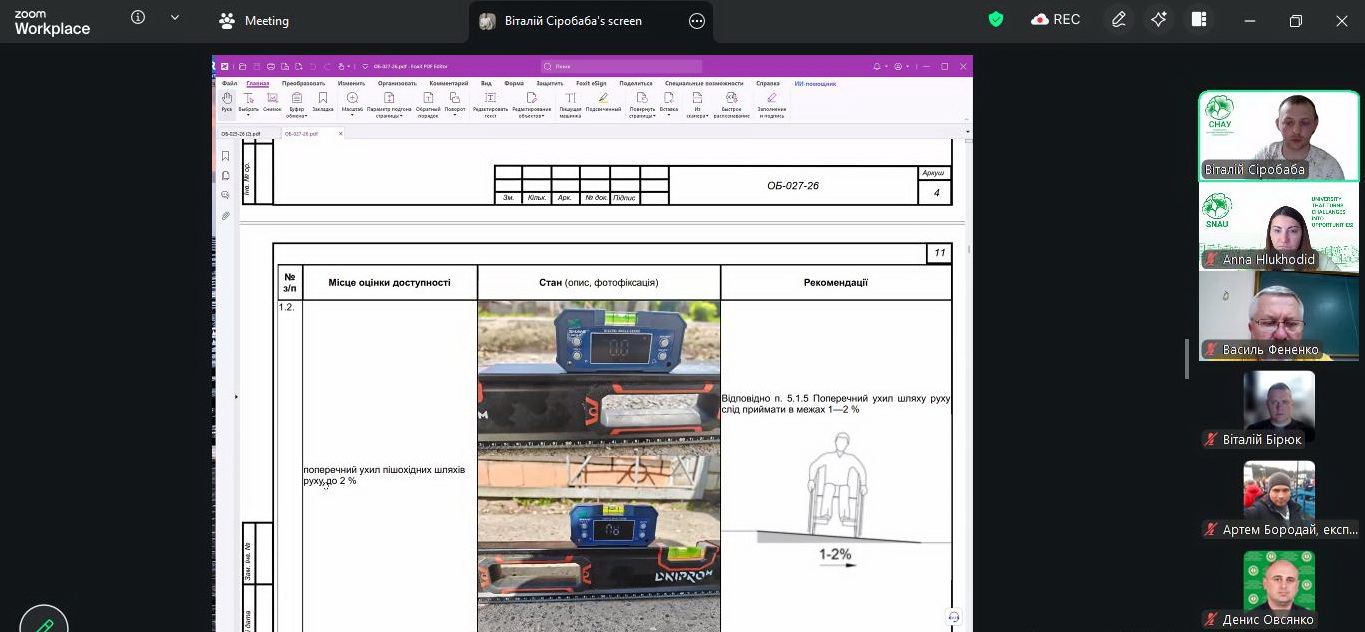
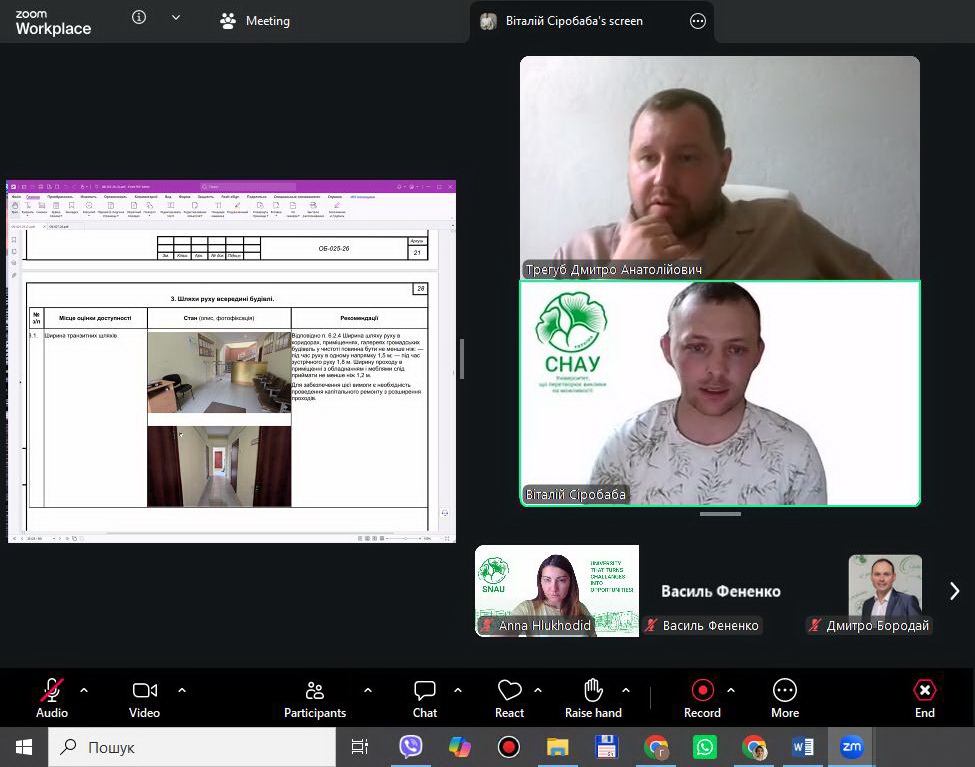
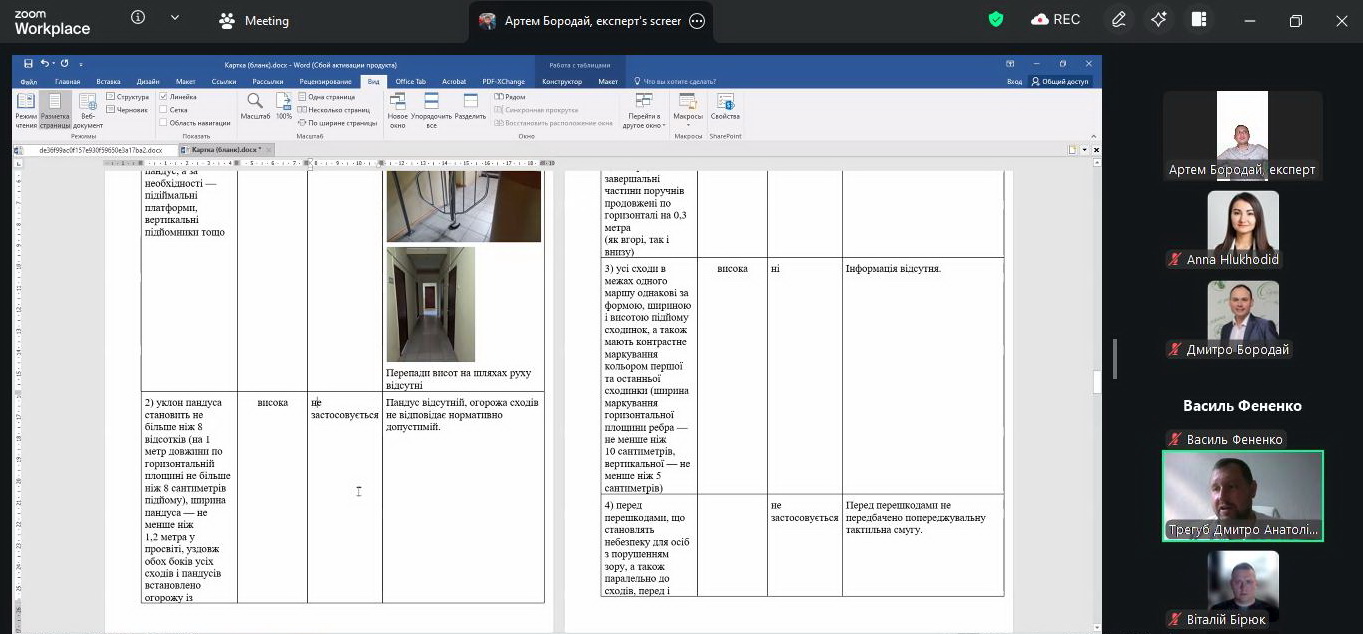
Participants studied government policy on accessibility, international best practices, and regulatory standards; familiarized themselves with methods for assessing the accessibility of buildings, street and road networks, transportation infrastructure, and public amenities; and learned how to prepare professional assessments and recommendations for removing barriers.
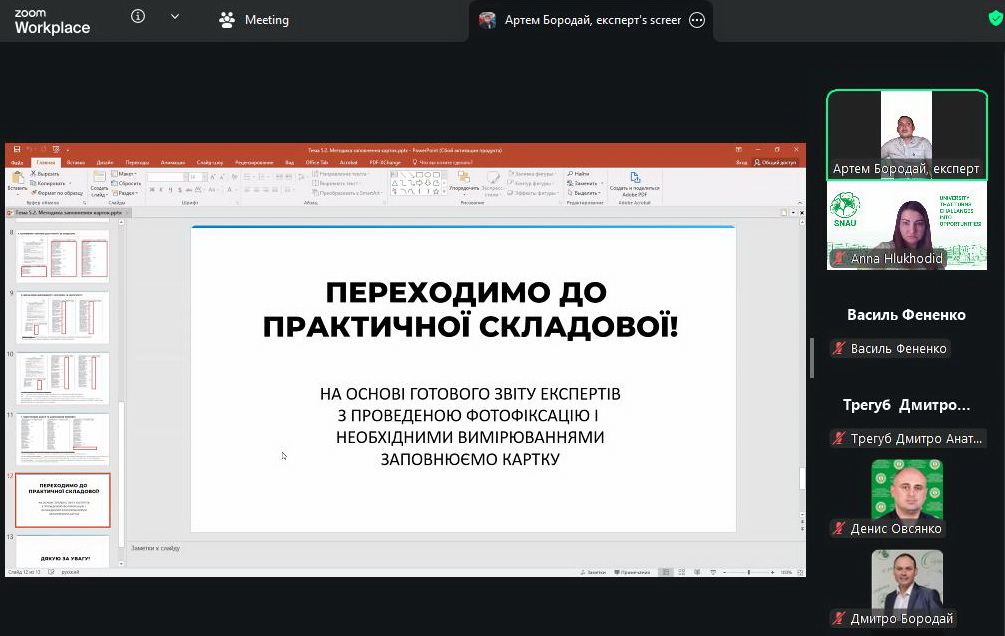
Special attention was paid to the practical component of the training. Participants worked on real-world case studies, analyzed successful examples of creating barrier-free environments, solved situational problems, and practiced algorithms for monitoring the accessibility of various facilities.
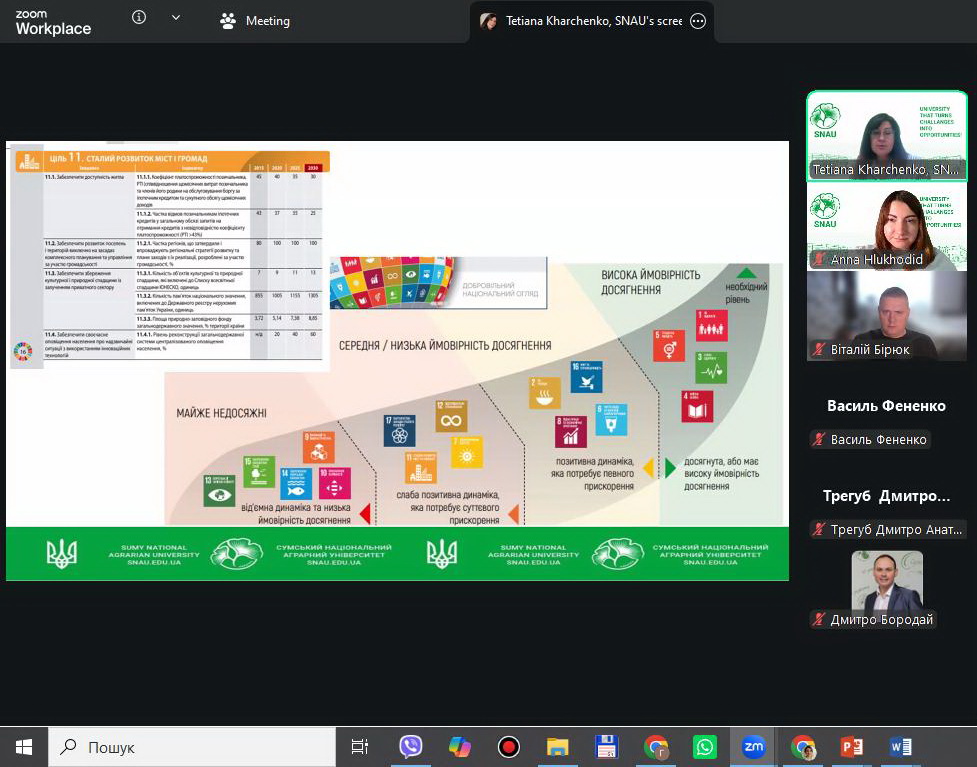
The training was provided by an interdisciplinary team of faculty members from Sumy National Agrarian University. The sessions were led by Artem Boroday, associate professor in the Department of Architecture and Engineering Surveys; Vitaliy Sirobaba, associate professor in the Department of Construction; Tetiana Kharchenko, professor in the Department of Public Management and Administration; and Ivan Kravchenko, professor in the Department of Administrative and Information Law. The combination of architectural, engineering, managerial, and legal expertise allowed for a comprehensive exploration of the topic of accessibility and demonstrated its practical significance for the development of modern communities.
The final assessment consisted of two stages: a test and the completion of an individual, practice-oriented assignment. All participants successfully demonstrated their competencies and received continuing education certificates attesting to their qualification as accessibility specialists.
“Accessibility is not just about accessible infrastructure. Above all, it is about respect for people, equal opportunities, and society’s responsibility to create a comfortable environment for everyone. For Sumy National Agrarian University, it is extremely important that our educational programs meet contemporary challenges and national priorities. That is why we not only train highly qualified specialists but also build a community of professionals who will implement the principles of accessibility in their communities and contribute to Ukraine’s recovery based on inclusivity and equal opportunities,” said Marharyta Lyshenko, Vice Rector for Scientific, Pedagogical, and Academic Affairs at Sumy National Agrarian University.
Today, accessibility is one of the key areas of state policy and an important component of Ukraine’s postwar recovery. In the context of war, accessibility takes on special significance for veterans, people with disabilities, internally displaced persons, parents with young children, and everyone who faces physical or social barriers on a daily basis.
As one of ten higher education institutions in Ukraine authorized to train specialists in accessibility, Sumy National Agrarian University has been consistently developing this field by combining scientific expertise, practical experience, and an interdisciplinary approach.
Training such specialists is an investment in community development, the creation of an accessible environment, and the formation of a society in which every person has equal opportunities for education, work, mobility, and full participation in public life.